REQUEST A QUOTE
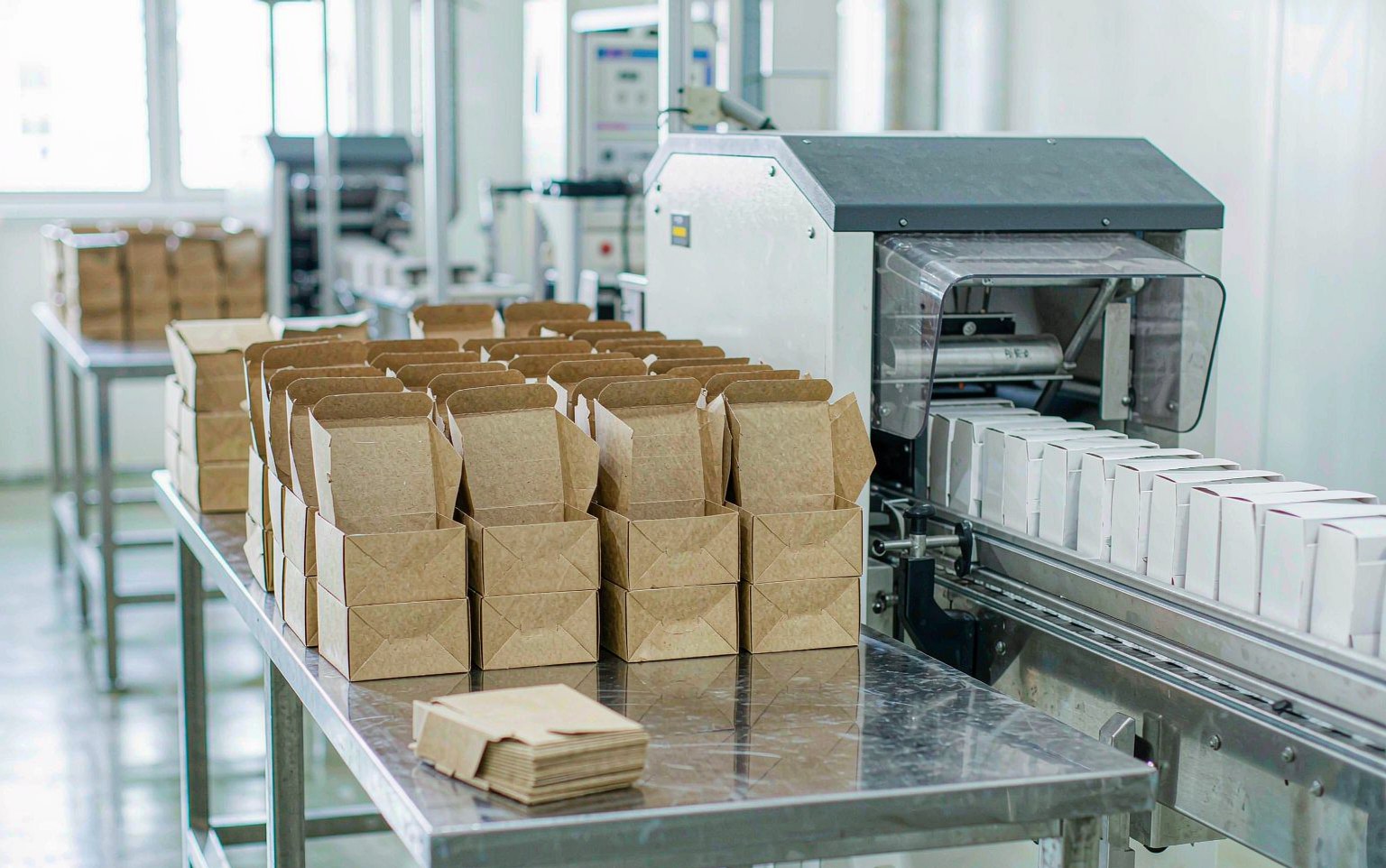
Ask ten packaging engineers what decides cartoning line performance and most will talk about servo drives, glue systems or tuck-arm design. Ask the operators who actually run the machine, and you will hear a different answer: the board. The cartoning machine can only fold what the board lets it fold. Choose the wrong carton board grade and even a brand-new, high-speed cartoner will jam, skew cartons and miss tucks all day long.
This guide explains the main folding-carton board grades, the specifications your machine actually feels, and a practical process for choosing — and validating — the right board before you commit to a full production order.
Procurement teams tend to evaluate board on price per ton and printability. Both matter, but they miss the point that board is a mechanical component of the packaging line. The folding plows, tuck arms, vacuum buckets and pressure rollers on your cartoner were all set up around a specific board caliper (thickness) and stiffness profile.
Swap in a board with different characteristics and three things change at once: the blank behaves differently through the plows, the closure flaps resist or spring back differently, and the machine settings that used to produce a crisp, square carton start producing rejects. In other words, board grade and machine setup are inseparable — the same logic that applies to carton styles applies to board selection too.
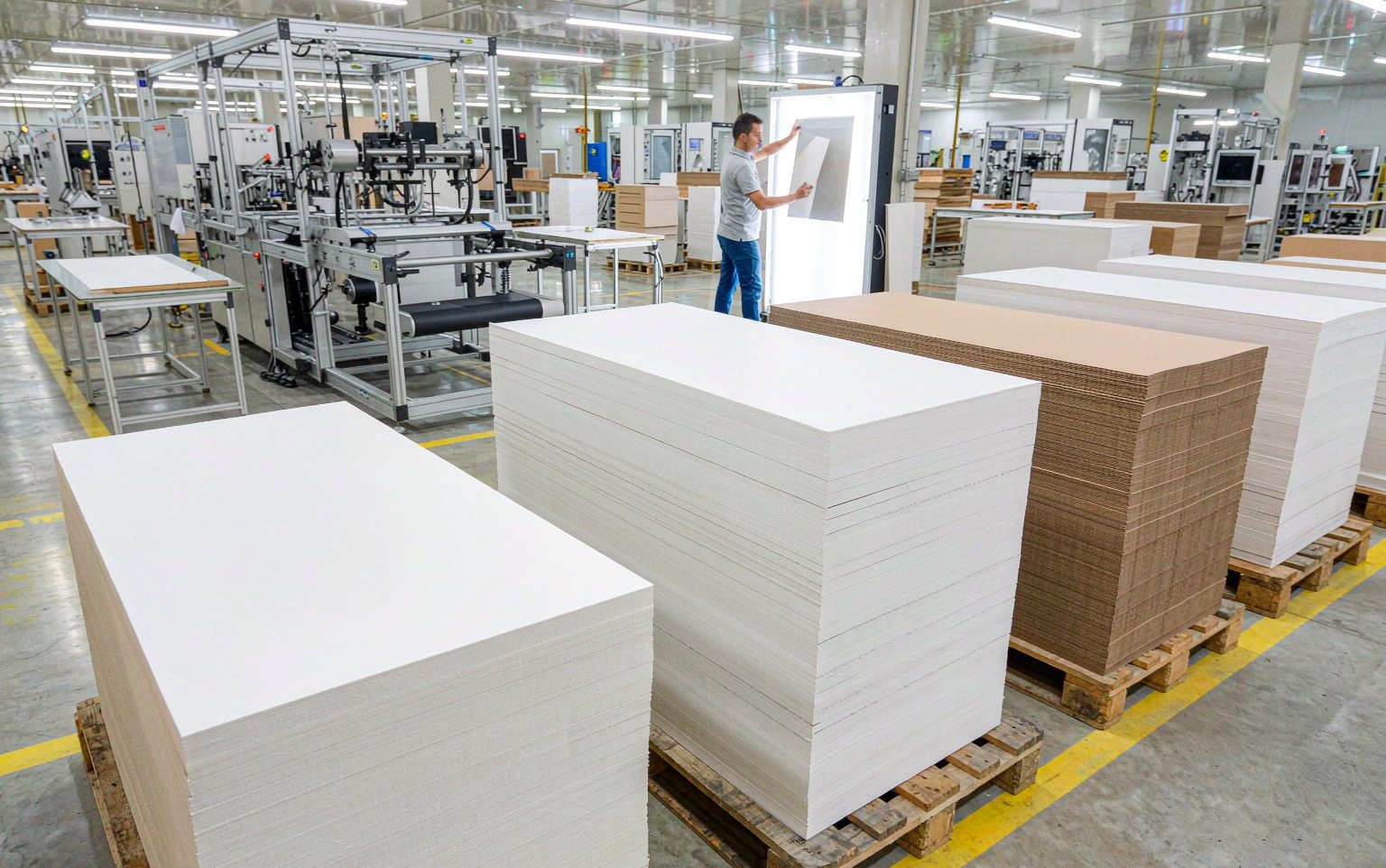
Folding carton board falls into four material families. Knowing which family a supplier quote refers to is the first step in comparing prices and machine compatibility on an equal basis.
SBS is made from bleached virgin wood pulp, giving it a bright white surface on both sides and excellent print quality. It is stiff for its weight, folds cleanly without cracking, and is the default choice for premium food, cosmetic and pharmaceutical cartons. It is also the most expensive of the four families, which is why brands reserve it for products where shelf appearance drives sales.
CUK starts from unbleached virgin fiber, so the reverse side shows the natural kraft brown tone. It offers outstanding tear resistance and moisture tolerance — one reason frozen food and beverage carriers rely on it — at a moderate price point. The trade-off is a less uniform printing surface, so designs that depend on a pure white back panel need a white-top variant.
CRB is produced from recovered fiber and carries a recycled-content story that many retail brands now actively market. It is the most economical option and prints acceptably on the coated front side. Its weaknesses are lower stiffness and more dimensional variation between lots, which means a cartoner running CRB usually needs slightly wider machine tolerances and more frequent checkups on folding station settings.
Microflute is technically a fine corrugated board, but converters use it like a heavy-duty folding carton. Its arched fluted layer gives it compressive strength far above any solid board of the same thickness, making it popular for heavier retail goods and subscription-box style packaging. Machine-wise it behaves differently from solid board: flutes crush under excessive roller pressure, and feed gaps need widening. Not every cartoner is specified for it, so confirm compatibility before specifying microflute on an existing line.
Grade names tell you the fiber family. What determines how the machine runs, however, are five measurable specifications. Insist on seeing them for every lot, not just the sales brochure.
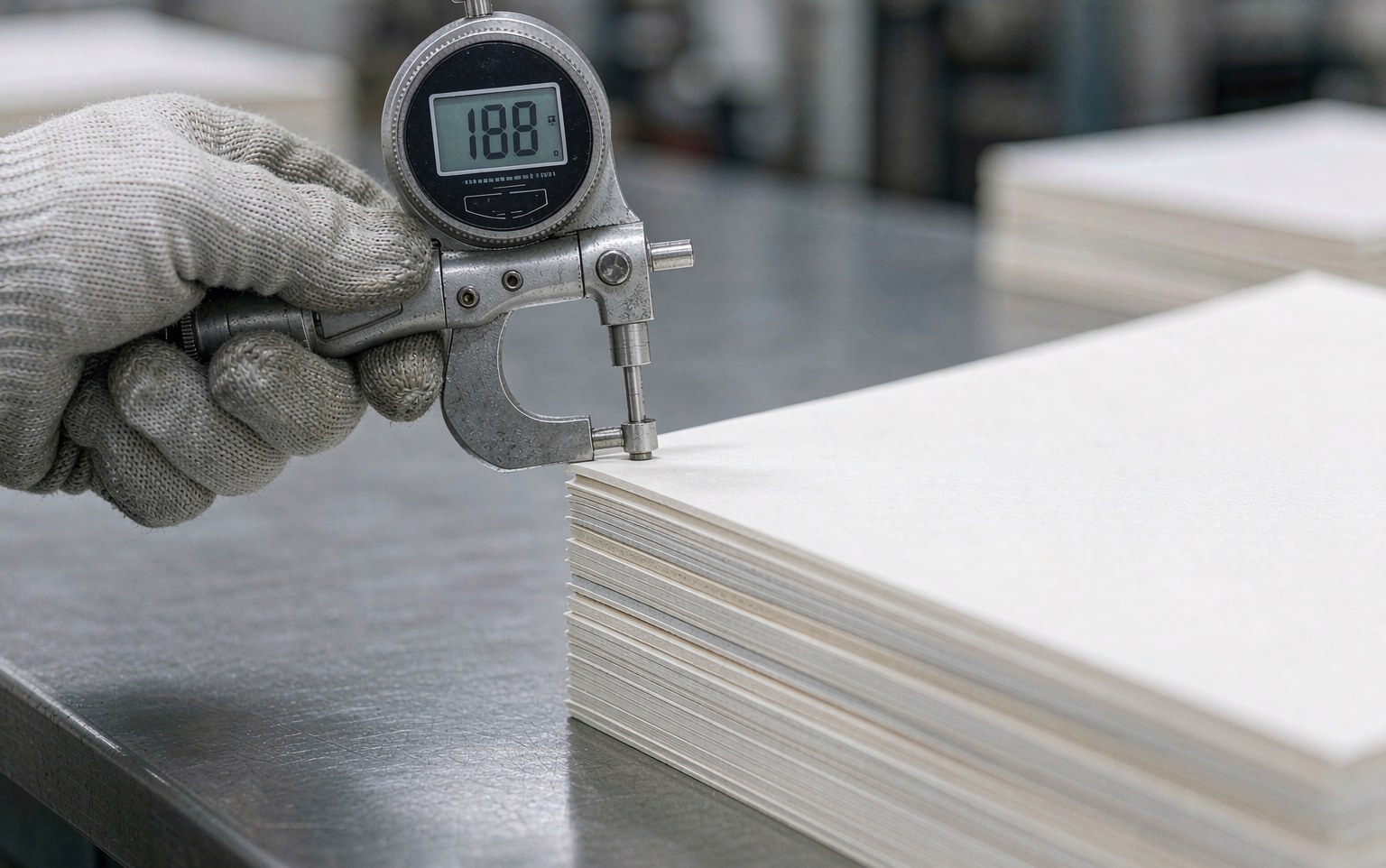
When your team evaluates samples, a quick caliper check at the edge of the sheet tells you more in thirty seconds than any datasheet conversation.
The table below summarizes how the four families compare on the attributes that matter most to a cartoning operation.
| Board grade | Typical GSM range | Relative cost | Stiffness & strength | Print surface | Best suited for |
|---|---|---|---|---|---|
| SBS | 200–400 | Highest | High for its weight | Excellent, bright white both sides | Premium food, cosmetics, pharma |
| CUK | 220–450 | Medium-high | Very good tear resistance | Good front, kraft reverse | Frozen food, beverage carriers |
| CRB | 250–500 | Lowest | Moderate, lot variation | Acceptable coated front | Value retail, dry goods, economy SKUs |
| Microflute (E/F) | 450–750 | Medium | Highest compression strength | Liner-limited | Heavy retail goods, e-commerce |
Dry foods and bakery items usually run well on CRB or mid-range SBS, where cost per carton dominates the buying decision. Frozen and chilled products need CUK or a moisture-resistant SBS variant, because condensation during cold-chain handling will warp ordinary recycled board and stall the machine. If your line handles multiple food SKUs, a versatile food cartoning machine specified for a 200–450 GSM range gives you the freedom to switch board families without retooling.
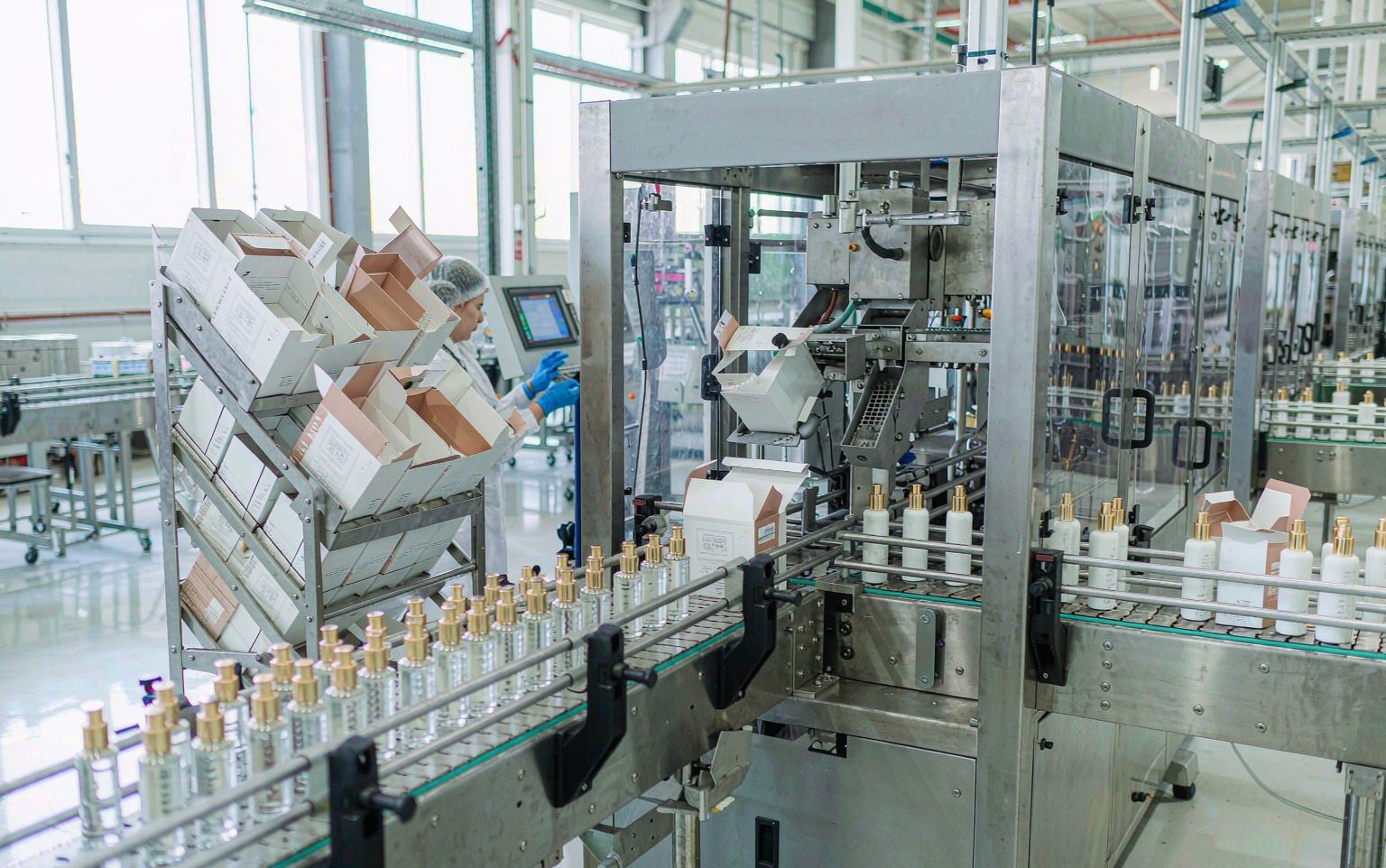
Pharma cartons live or die on legibility and crease integrity, which pushes buyers toward SBS almost by default — the crisp white surface supports small print and the virgin fiber folds without hairline cracking. Cosmetics follow the same logic with even more emphasis on shelf appeal; brands typically specify SBS 250–350 GSM with a premium coating. Machine-wise, these light-to-mid GSM boards run fastest, which is why most cosmetic packaging machines are optimized around that window.
Once the filled carton approaches or exceeds roughly half a kilogram, solid board walls start to bulge. Either step up to a higher-GSM SBS (350–450) or move to microflute. The second option changes the machine conversation: fluted board needs more clearance at the feed and gentler roller pressure, so it is worth discussing with the equipment builder before the artwork is even designed.
Most of what operators call "machine problems" trace back to board. Watch for these five:
When any of these appear, run through a structured cartoner troubleshooting guide before blaming the machine — and check the incoming board certificate against the lot you approved at trial.
Board decisions look cheap on paper and expensive in production. A disciplined validation sequence keeps the risk low:
If you are investing in equipment at the same time, discuss board flexibility with the machine builder up front. The incremental cost of a wider GSM window is small relative to the total cartoner investment, and it protects you from being locked into a single board supplier forever. A machine such as a horizontal cartoner specified for 200–450 GSM — see our comparison of horizontal vs vertical cartoning machines — can absorb most retail board grades without mechanical changes.
There is no single best grade — there is a best match. SBS between 250 and 350 GSM is the easiest board for most automatic cartoners to run because it is uniform, stiff and folds cleanly. CRB runs fine too, but expect slightly wider machine tolerances and more frequent lot checks. Microflute requires a machine explicitly specified for it.
Most retail folding cartons land between 250 and 350 GSM. Lighter products and cosmetics go toward 250–300; heavier or larger cartons step up to 350–450. Below about 200 GSM, blanks become floppy and hard to feed reliably; above 450 GSM, only cartoners with heavy-duty folding stations will cope.
Yes, within its specified GSM and caliper window. A machine rated for 200–450 GSM will typically run SBS, CUK and CRB with only recipe adjustments, while microflute needs dedicated feed and folding settings. That flexibility is exactly why the GSM window should be a headline criterion when you compare machines, alongside format range and changeover time.
No. Strength on the shelf comes from stiffness and structure, not thickness alone. A well-designed lid-and-base carton in 300 GSM SBS can outperform a poorly creased 400 GSM carton, and microflute beats both on compression at similar thickness. Specify by stiffness data, not just caliper.
Board grade is where packaging cost, brand presentation and line uptime intersect. The cheapest board per ton is rarely the cheapest per thousand shipped cartons once rejects, jams and changeover friction are counted. Shortlist your board families early, put the five key specifications in every purchase order, and validate on the real machine before the first full production run.
If you are unsure whether your current board will run on the machine you are planning to buy, send Mattkay your product and board specifications for a free feasibility assessment — our engineers will confirm the matching GSM window and recommend the right cartoner configuration for your line.