
REQUEST A QUOTE
Every day, millions of products reach store shelves inside a folded carton — medicine boxes, food cartons, cosmetic cases, electronics packaging. Behind most of them stands one machine: the cartoning machine. This complete guide explains what a cartoning machine is, how it works, which types exist, what products it can pack, and how to choose the right one for your factory.
A cartoning machine (cartoner) is packaging equipment that automatically erects folded carton blanks, fills them with product(s) — with or without a leaflet — and closes the carton by tucking in flaps or applying glue. It sits at the secondary packaging stage: after the product itself is made and sealed in its primary packaging (a sachet, bottle, blister, or wrap), the cartoner places it into a printed carton that protects the product and presents it to the customer.
Depending on the line layout, a cartoner may also handle tertiary tasks, such as batching multiple cartons for a case packer downstream. For a full comparison of those two machine categories, see our guide on cartoning vs. case packing.
It is easy to confuse cartoners with neighboring equipment:
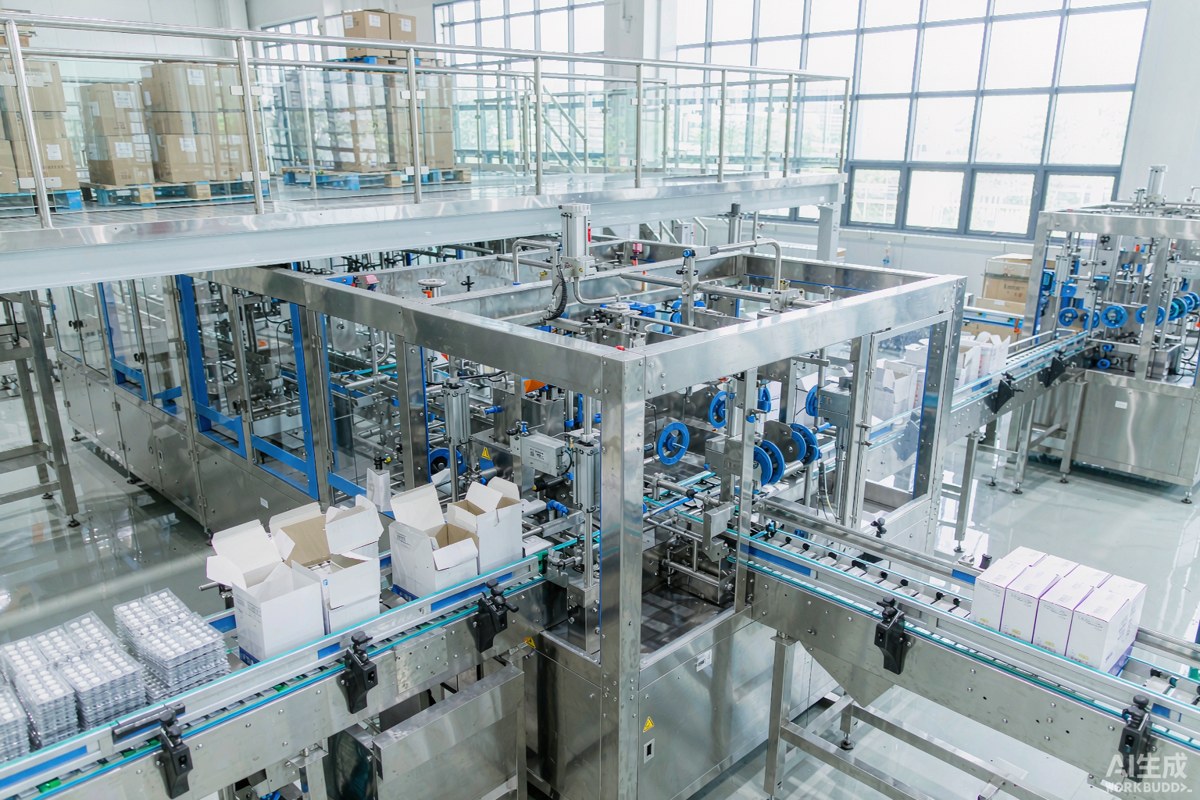
Despite the variety of models, nearly every cartoner follows the same five-step process:
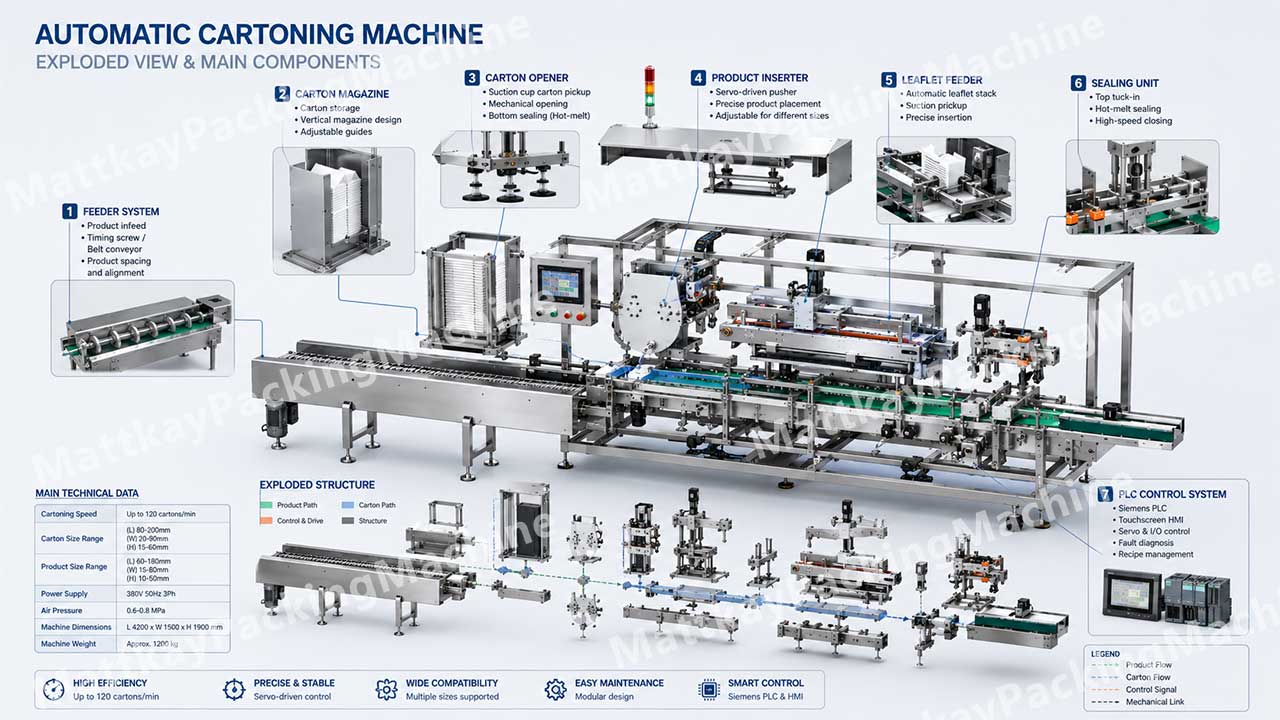
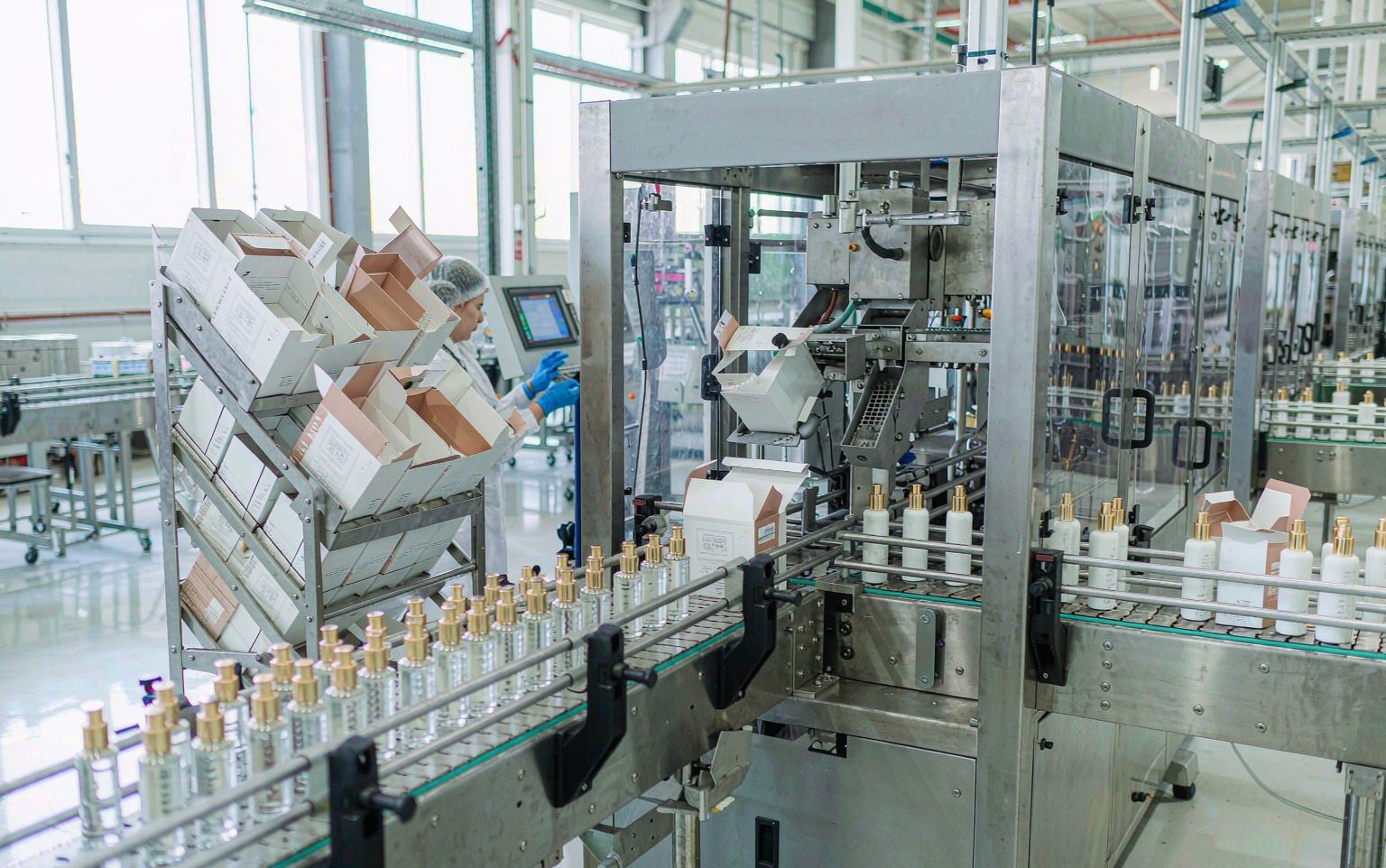
Flat, die-cut carton blanks are stacked in the carton magazine. A suction cup or pick-up arm pulls one blank at a time from the stack and opens it into a three-dimensional box, which is then locked onto the machine's chain carriers.
Products arrive from upstream equipment — a feeder, conveyor, or counting system — precisely synchronized with the open cartons. A pusher or gripper transfers the product (and leaflet, if required) into the carton in a single controlled motion.
The machine folds the small flaps first, then the major flaps. Closing happens by one of three methods: tuck-in (flaps tucked into the carton, resealable), glue sealing (hot-melt or cold glue for tamper evidence), or lock/interlock styles for specific carton designs.
Closed cartons are ejected onto the outfeed conveyor, ready for coding, weighing, or case packing.
On fully automatic lines, sensors and vision systems verify carton presence, product insertion, and print quality between the closing and discharge stages, rejecting any faulty box automatically.
Understanding the core components helps you evaluate any supplier's quotation:
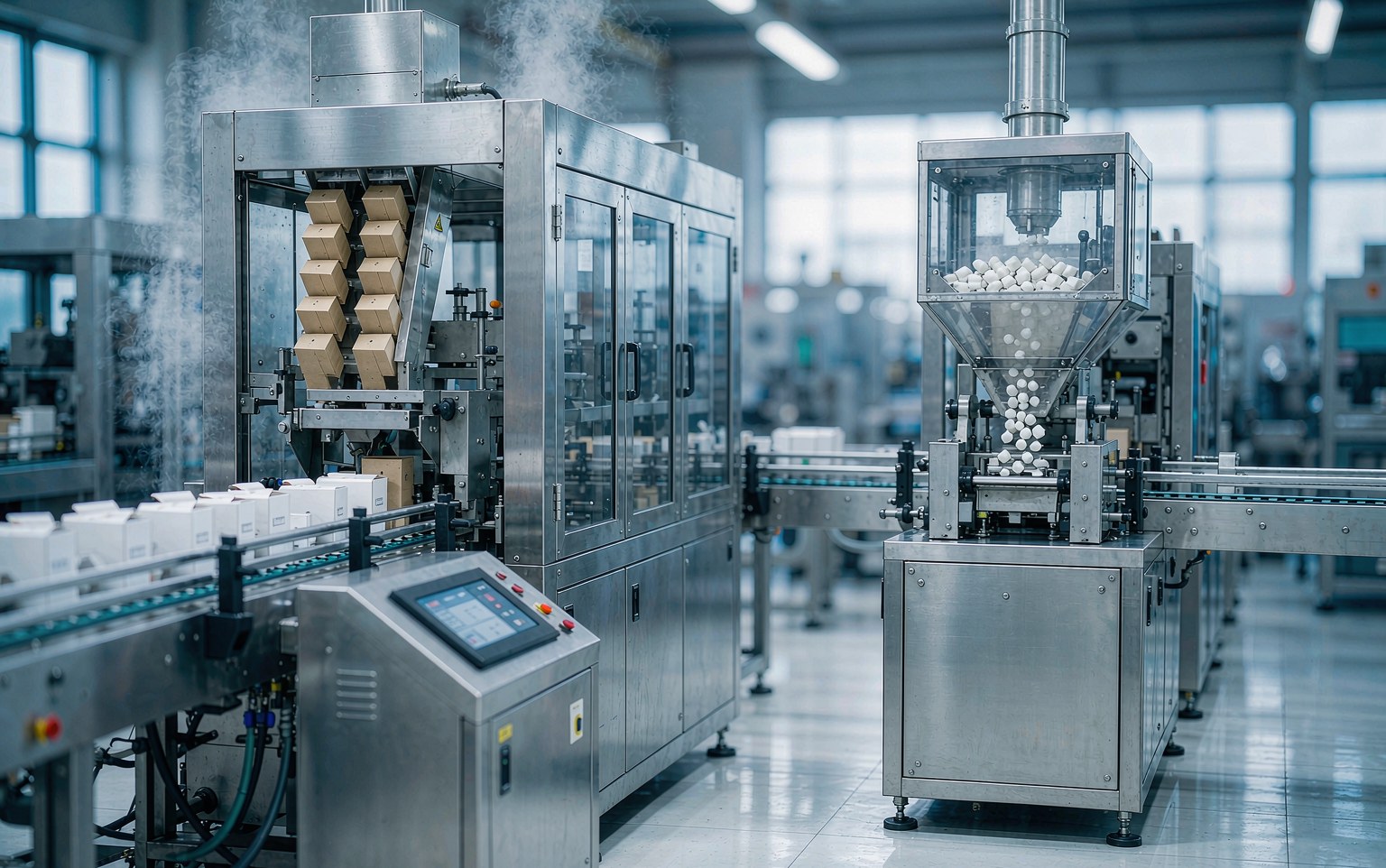
Vertical cartoners drop products into cartons from above — ideal for free-flowing goods like granules, sachets, and stick packs. Horizontal cartoners push products in sideways — the standard for blisters, tubes, pouches, and most rigid products. Which one fits depends entirely on your product's shape and stiffness; our horizontal vs. vertical cartoning machine guide breaks down the decision.
End-load cartoners (the most common type) insert products through the open end of the carton. Top-load cartoners load from above and are used for multi-item packs, gift sets, and products that must be arranged in layers.
Intermittent motion cartoners stop the carton carrier briefly at each station — simpler, slower (typically 30–80 boxes/min), and more affordable. Continuous motion cartoners keep the carrier moving throughout the cycle, reaching 100–300+ boxes/min for high-volume products.
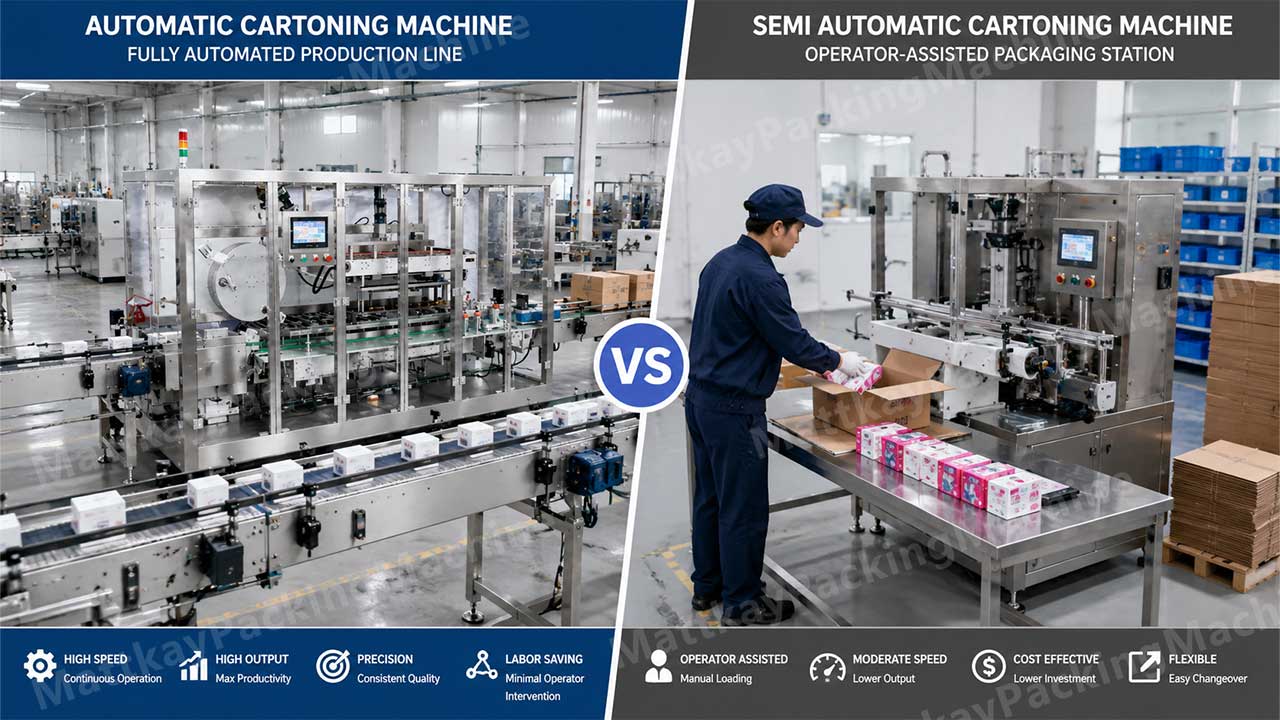
A semi-automatic cartoner automates carton erecting and closing, but an operator loads products manually. A fully automatic cartoner does everything — feeding, inserting, closing, rejecting — unattended. Semi-automatic machines suit startups and low-volume or irregular products; fully automatic machines pay off above roughly 3,000–5,000 units per shift. The full comparison, including ROI math, is in our fully automatic vs. semi-automatic cartoning machine article.
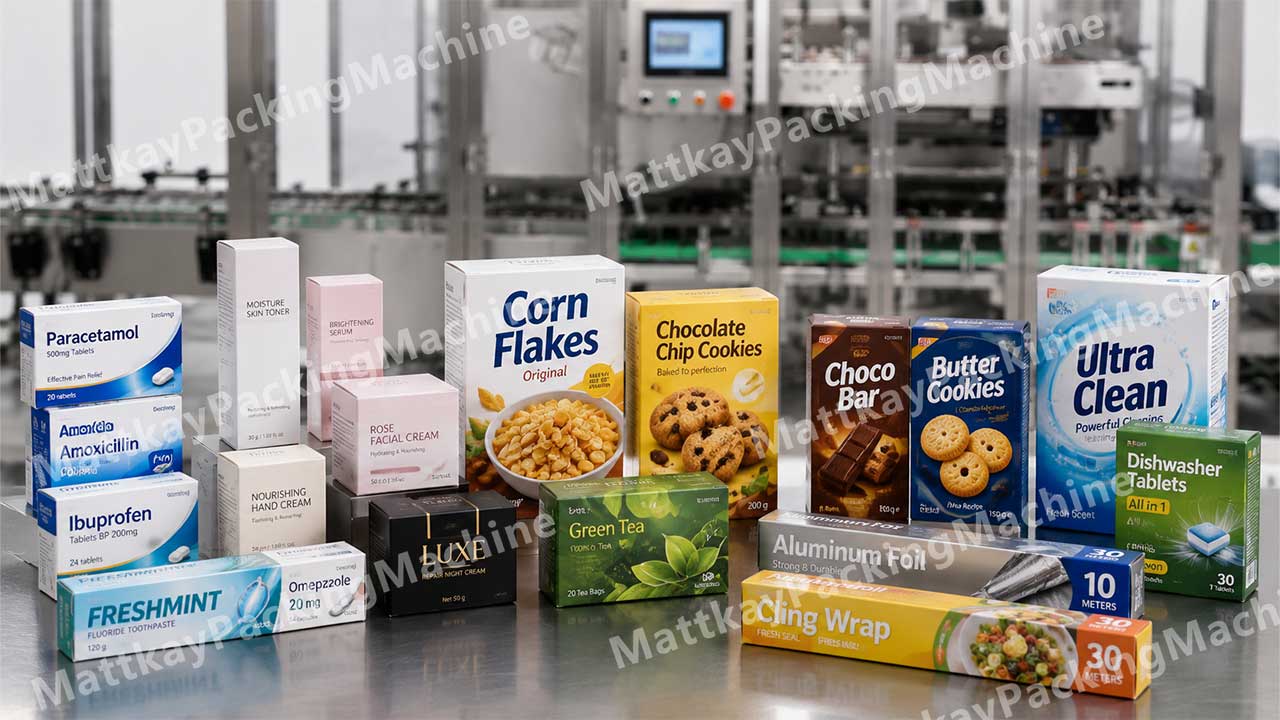
Cartoners serve almost every consumer and healthcare industry:
The common denominator: the product must be relatively rigid or well-grouped, and the carton must hold its shape after erection. Powders and liquids go into cartons only after primary packaging into sachets, bottles, or tubes.
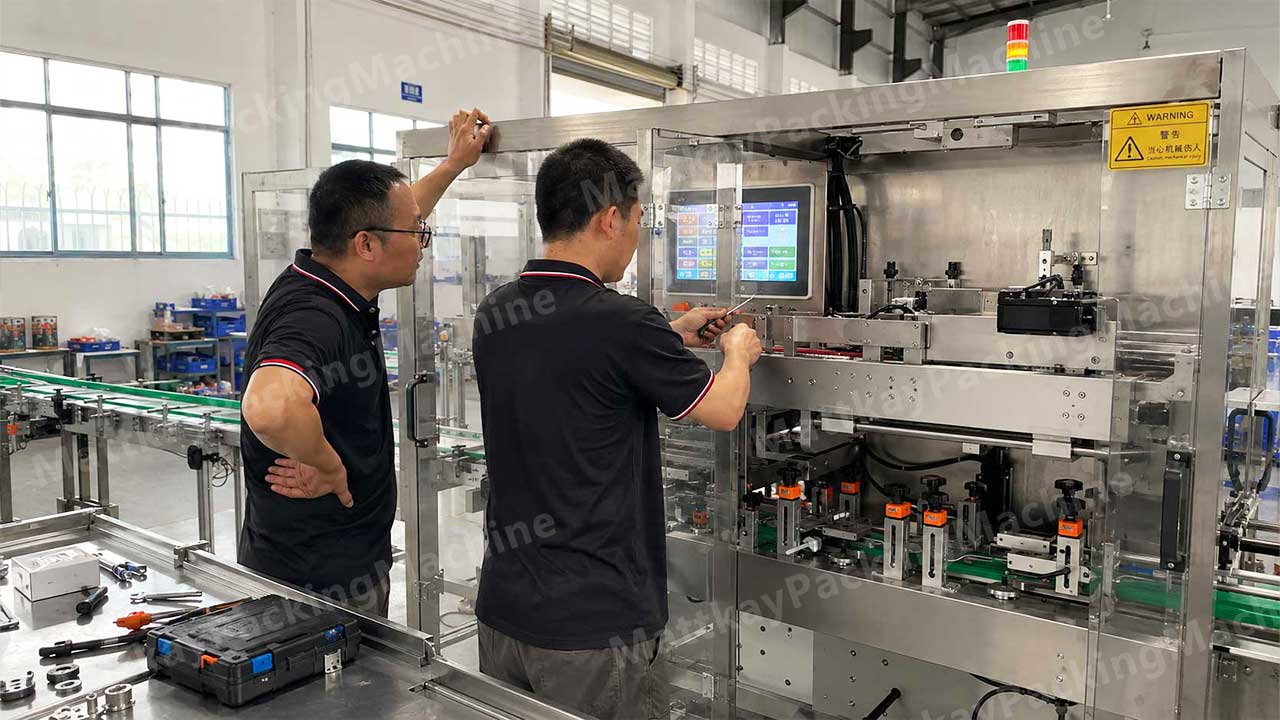
Measure your product's dimensions, weight, rigidity, and orientation stability. Irregular or soft products demand custom feeding solutions; perfectly rectangular products suit standard pusher feeding. Always arrange a trial run with your actual products, not just samples of similar size.
Rated machine speed is not your real output — changeovers, feeding limits, and micro-stops all reduce it. Work backward from your daily production target and shift pattern; our cartoning machine speed calculation guide shows the exact formula manufacturers use to avoid over- or under-buying.
Provide your carton supplier's specifications: blank dimensions, board grade, and closing style. If you plan multiple SKUs, check the changeover time and whether size parts are tool-free.
Beyond the machine price, budget for installation, size parts, spare parts, and optional features (vision systems, coders, leaflet feeders). A transparent cost model for every budget level is available in our automatic cartoner cost breakdown.
Look for proven experience in your industry, responsive technical support, spare-parts availability, and clear documentation. First-time buyers should follow a structured checklist — our cartoning machine buying guide covers the questions most factories forget to ask, and our selection framework walks through the decision step by step.
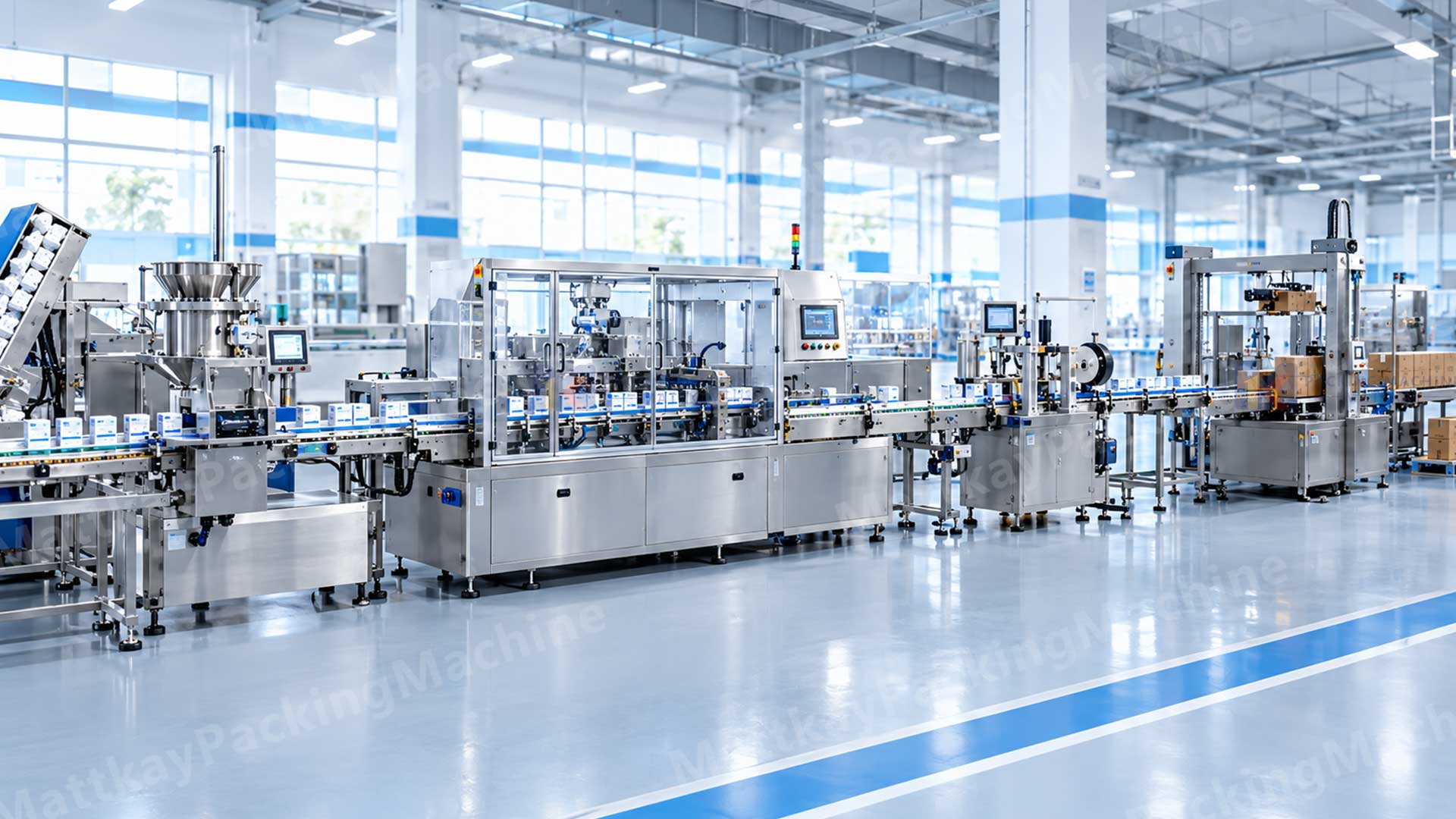
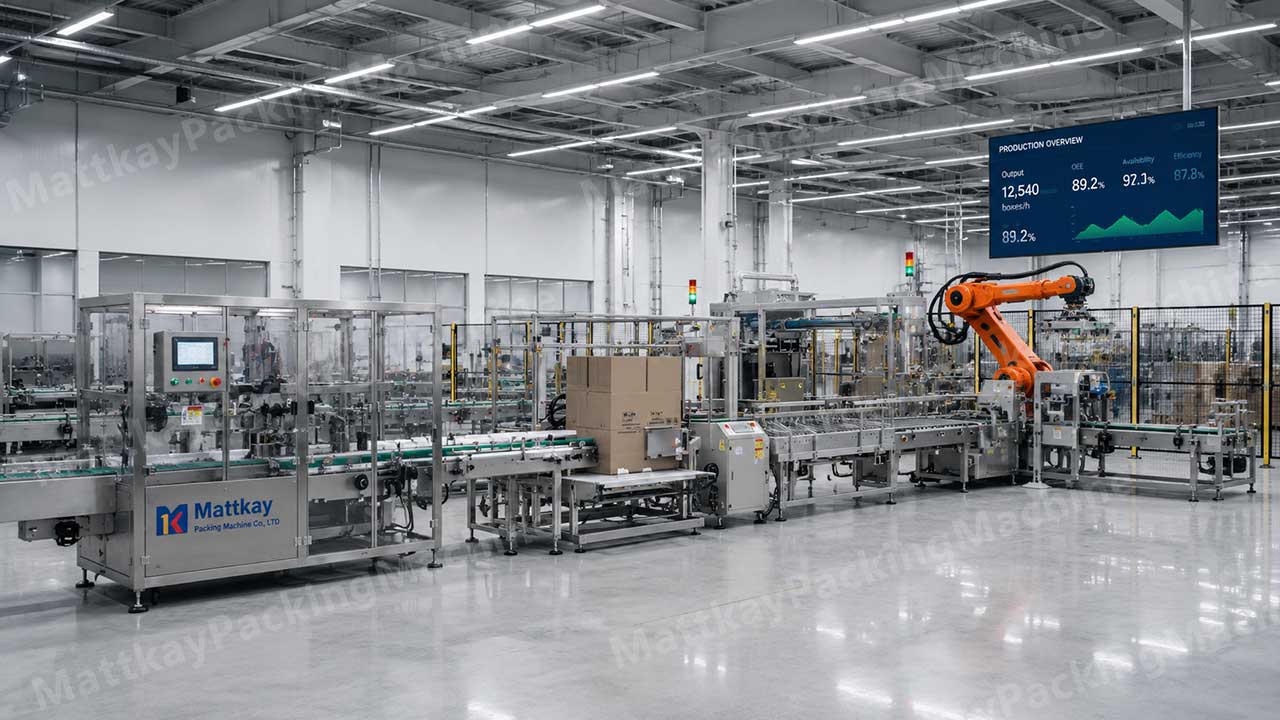
A cartoner never works alone. Its performance depends on the upstream equipment that prepares products and the downstream equipment that handles finished cartons. Successful integration requires matching five things: product flow, carton specifications, machine speed across the line, control signals (PLC/HMI communication), and factory layout including power and compressed air.
The complete process — from layout planning to commissioning trials — is covered in our dedicated guide: how to integrate a cartoning machine into a production line.
Even well-built cartoners develop habits: carton jams at the magazine, unstable product feeding, insertion errors, or opening failures with worn suction cups. Most of these trace back to four root causes — carton quality, product variability, worn size parts, and skipped maintenance.
When issues appear, our troubleshooting guide for 12 common cartoning machine problems gives fast diagnostic steps. To prevent them, follow the daily, weekly, and monthly maintenance checklist — fifteen minutes per shift of cleaning and inspection prevents most unplanned downtime.
It erects flat carton blanks, inserts products (and leaflets where required), and seals the cartons — automating the step between product manufacturing and retail-ready packaging.
Intermittent motion machines typically run 30–80 boxes/min; continuous motion machines reach 100–300+ boxes/min. Real output depends on your product, carton quality, and feeding stability — see our speed calculation guide for realistic planning numbers.
Semi-automatic machines start in the low five figures (USD), while fully automatic machines range widely with speed and configuration. The full pricing logic, including hidden costs, is in our cost breakdown article.
Yes, with size parts and recipe-based changeovers. Servo-driven machines store all size recipes in the HMI, so changeover is mostly mechanical adjustment — typically 20–40 minutes depending on the difference between formats.
Tuck-in flaps fold into the carton and remain resealable — common for food and cosmetics. Glue sealing permanently bonds the flaps for tamper evidence — standard for pharmaceuticals and export goods.
With proper maintenance, a quality cartoner runs 10–15 years or more. Frame construction, servo component quality, and spare-parts availability are the main durability factors.
A cartoning machine is the bridge between your product and your customer's first impression of it. The right cartoner matches your product's characteristics, your realistic output target, and your growth plans — not just the number on the quotation. Start from your product and carton, calculate true speed requirements, and choose a supplier who proves their machine with a trial run on your actual products.
Planning a cartoning project? Send us your product and carton specifications — Mattkay's engineers will recommend the right configuration and provide a trial-run video with your own products.

[…] Vertical cartoners are also common where the carton must be filled with counted or weighed product from an auger or multihead weigher positioned directly above. Learn more in our overview of how automatic cartoning systems work. […]
[…] a manufacturer of automatic cartoning systems since 2014, Mattkay (MTK) builds machines designed for long service life. But every machine — […]
[…] we explain in our complete guide to automatic cartoning systems, a cartoner is only one link in a chain. The moment you connect it to a real filling machine, a […]
[…] you will learn what AI actually does in packaging machinery, where it delivers real value on an automatic cartoning machine, what its limitations are, and how to evaluate AI features when comparing […]
[…] if one converts in 12 minutes and the other in 50. If you are still sizing the machine, start with what a cartoning machine actually does, because the mechanism type sets the floor on changeover […]
[…] If you are new to cartoning equipment altogether, start with our complete introduction: what is a cartoning machine. […]
[…] sequence is the same as any automatic cartoning system: erect a flat carton, load the product, fold and insert a leaflet, glue, close, code. What changes […]