REQUEST A QUOTE
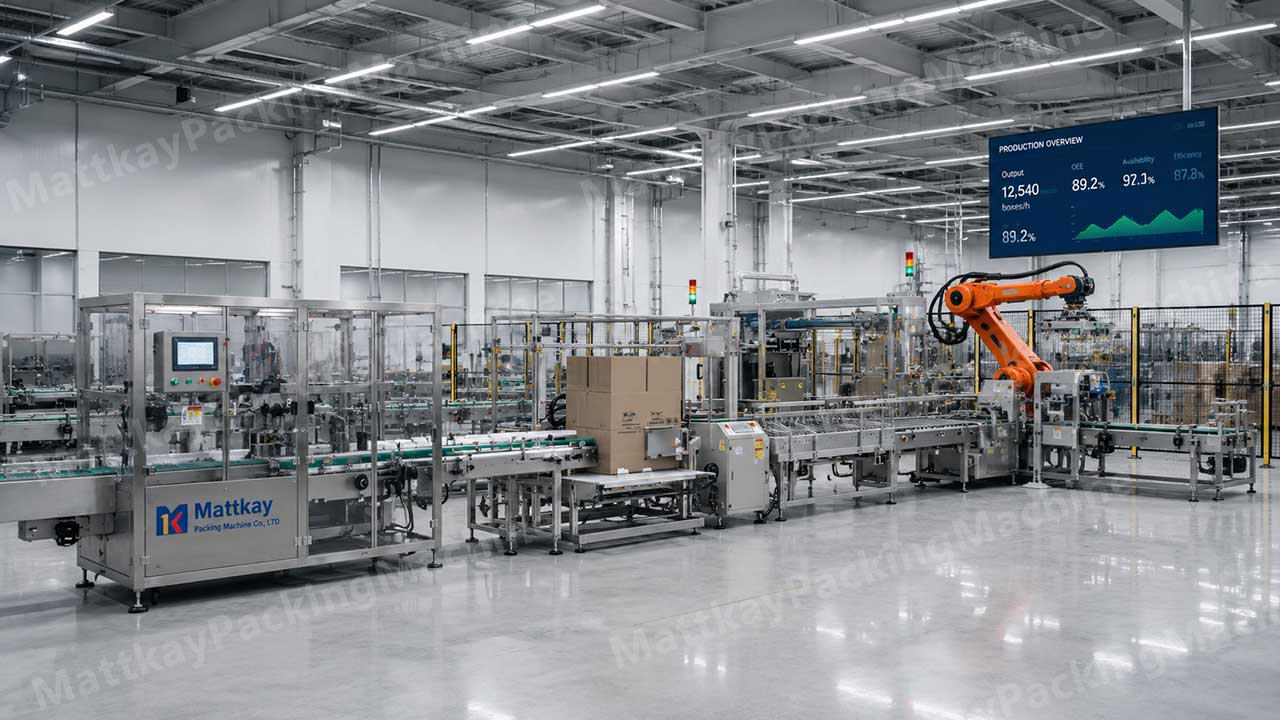
Integrating a cartoning machine into an existing production line requires more than placing a new machine beside other equipment. Product flow, carton specifications, machine speed, control signals, and factory layout must work together to achieve stable packaging performance.
For food manufacturers, pharmaceutical companies, cosmetics producers, and consumer goods factories, a well-integrated automatic cartoning machine can reduce manual handling, improve packaging consistency, and simplify production management.
However, integration problems often appear when upstream equipment supplies products inconsistently, the cartoner cannot maintain the required output, or downstream machines cannot handle finished cartons at the same rate.
This guide explains how to integrate a cartoning machine into a production line, what equipment may be required, and which technical details manufacturers should confirm before purchasing.
Before selecting equipment, map the complete packaging process from product preparation to finished carton discharge.
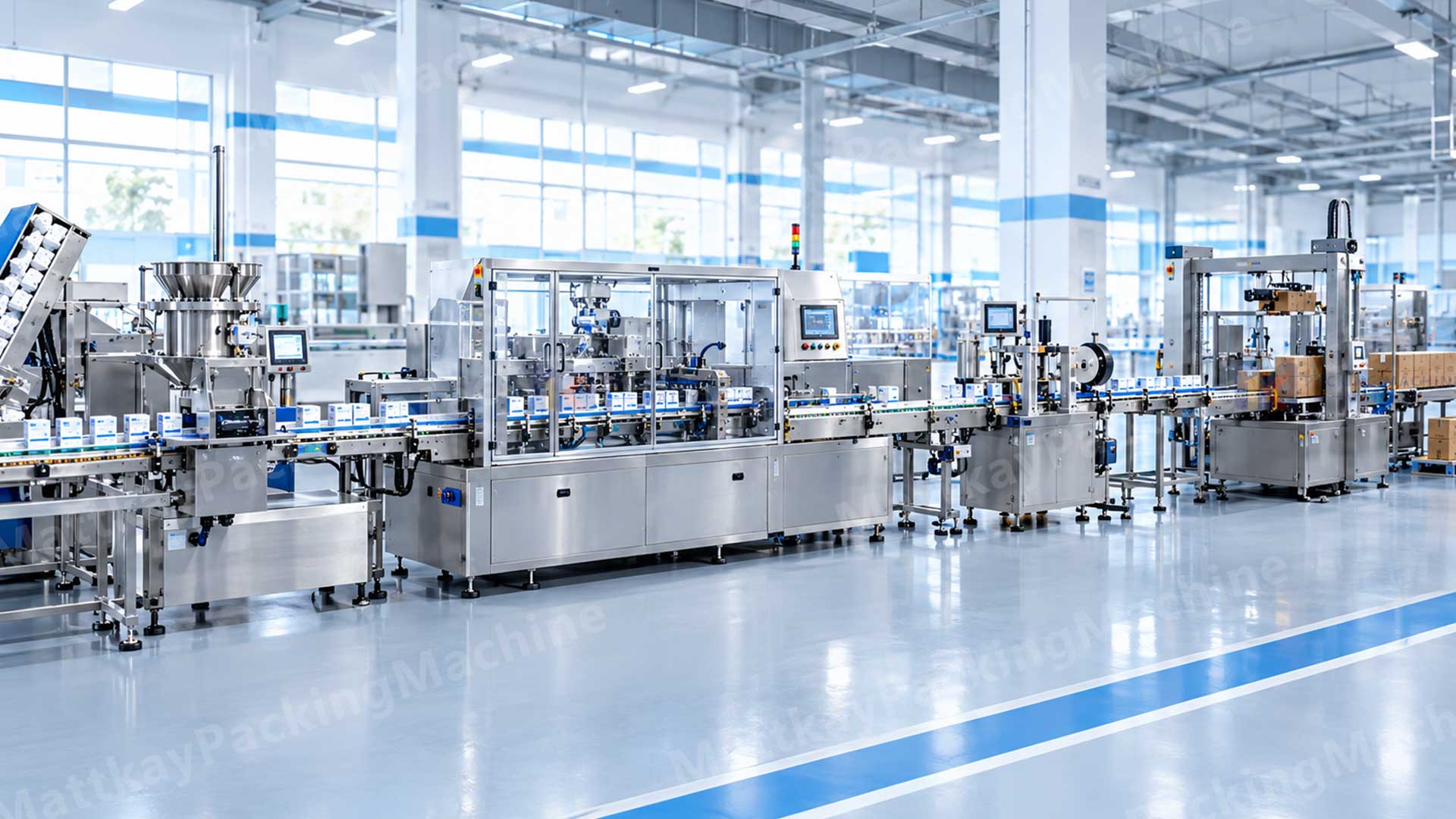
A typical secondary packaging line may follow this sequence:
Product preparation → Product feeding → Carton opening → Product insertion → Carton closing → Inspection → Downstream packaging
The exact configuration depends on the product, carton design, and required production capacity.
Upstream equipment prepares and transfers products to the cartoning machine. Depending on the application, this may include:
Flow wrapping machines for individually wrapped products. Filling and sealing equipment for sachets or pouches. Blister packing machines for pharmaceutical products. Counting and grouping systems for multipack applications. Conveyors for transferring finished primary packs.
For example, a food manufacturer packing multiple powder sachets into one retail carton may require automatic counting, grouping, and transfer before the products enter the cartoner.
The infeed system should deliver products in the correct quantity, orientation, and sequence.
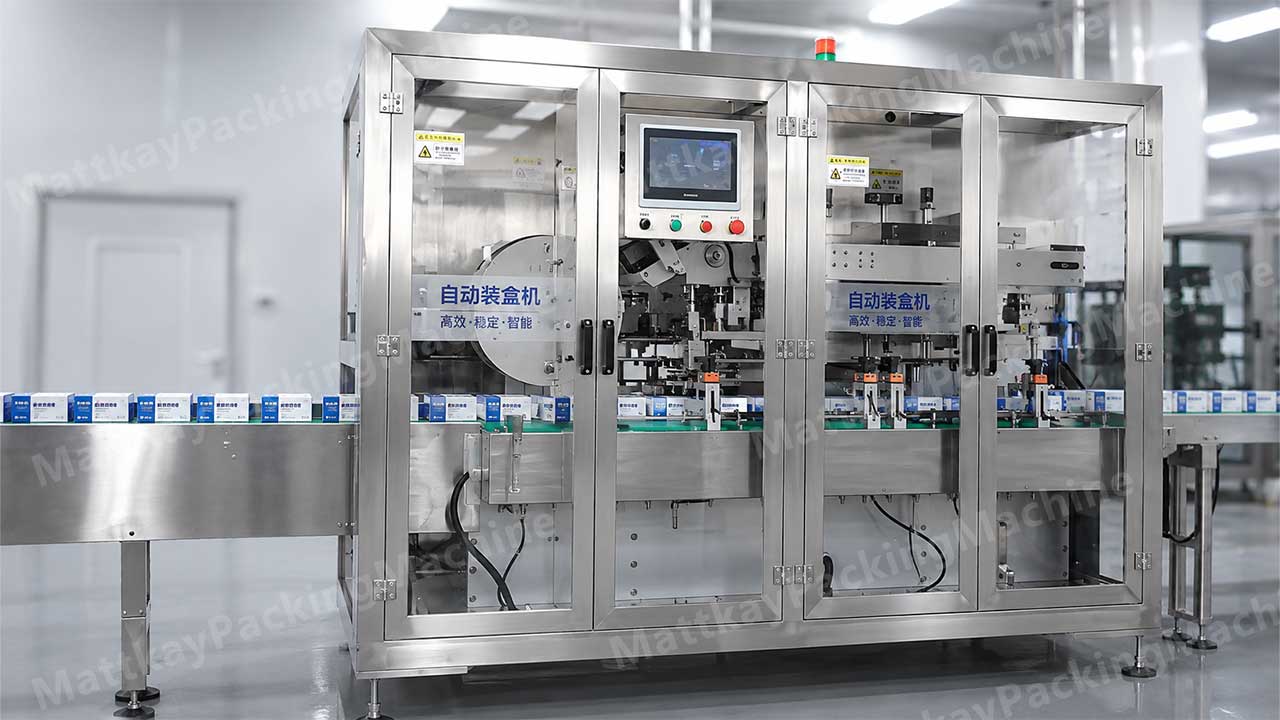
The cartoning machine takes flat carton blanks, opens them, inserts the required products, and closes the cartons using the specified sealing method.
Depending on the application, the machine may also include leaflet feeding, product counting, coding interfaces, or inspection functions.
Mattkay's automatic cartoning machine solutions can be evaluated according to the product format, carton dimensions, feeding method, and required automation level.
After cartoning, finished cartons may be transferred to:
Checkweighers. Labeling or coding inspection systems. Case packing machines. Shrink-wrapping equipment. Conveyors and palletizing systems.
The downstream process must be able to receive finished cartons without creating a bottleneck. If the next machine stops frequently, the cartoner may also need to slow down or stop unless sufficient accumulation capacity is available.
Successful integration starts with the actual product and packaging materials—not simply the machine catalogue.
Before designing the feeding system, confirm:
Product length, width, and height. Product weight and fragility. Product orientation during transfer. Number of products required per carton. Whether products need counting, stacking, or grouping.
Sachets, stick packs, tubes, bottles, blister cards, and irregularly shaped products may require different feeding mechanisms.
For example, stick-pack products may need a counting and grouping system, while bottles may require spacing, orientation control, and a guided insertion mechanism.
Carton dimensions and construction influence the machine's mechanical configuration.
Provide the supplier with the minimum and maximum carton dimensions, board material, carton samples, and intended closing method.
Common carton styles include:
Tuck-end cartons. Lock-bottom cartons. Snap-lock cartons. Glue-sealed cartons. Special retail cartons with hanging tabs.
A tuck-in carton and a hot-melt glue-sealed carton require different closing arrangements. Confirm compatibility before finalizing the machine design.
Drawings are useful, but actual samples provide additional information about friction, stiffness, product handling, carton opening, and sealing performance.
Where possible, arrange a machine trial using representative products and cartons. Include different product sizes or carton formats if the line will handle multiple SKUs.
The trial should verify feeding stability, carton opening, insertion accuracy, closing quality, and the agreed production target.
A cartoning machine should not be selected by rated speed alone. The production line must maintain a workable balance between upstream supply, cartoning capacity, and downstream handling.
First, determine how many finished cartons your factory needs to produce per minute.
Use this basic calculation:
Required cartons per minute = Products required per minute ÷ Products per carton
For example, if a packaging process supplies 600 individual sachets per minute and each carton contains 10 sachets, the theoretical requirement is 60 cartons per minute.
This calculation assumes that product supply is consistent and that the machine can handle the specified grouping pattern. Actual output must also account for planned stops, changeovers, rejects, and other operating conditions.
A machine's maximum rated speed does not guarantee the same output throughout a production shift.
Actual performance depends on product feeding, carton quality, changeover frequency, operator practices, and the stability of connected equipment.
Ask the supplier to define the rated speed, expected operating conditions, and acceptance criteria for the intended product.
If upstream equipment cannot provide enough products, the cartoner may remain underfed. If downstream equipment cannot receive finished cartons, the cartoner may experience repeated stops.
Review the normal operating speed of each machine and identify where accumulation conveyors or buffers may be useful.
Buffer sizing should be based on expected interruption duration, product characteristics, available space, and the recovery sequence—not on an arbitrary capacity target.
The feeding system is often one of the most application-specific parts of a cartoning project.
Conveyors transfer products from upstream machines to the cartoner. Guide rails, spacing devices, and sensors may be needed to maintain consistent product positioning.
The conveyor height, direction of travel, transfer distance, and discharge position should be confirmed during layout design.
Products such as sachets, stick packs, small bags, and individually wrapped food items may need to be counted and grouped before insertion.
The system should confirm the correct quantity for each carton and prevent incomplete groups from entering the packaging process.
Mattkay's cartoning equipment can be assessed for applications requiring product counting, grouping, and automatic carton loading.
Products that are flexible, fragile, slippery, or irregularly shaped may require customized feeding structures.
Depending on the application, solutions may include dedicated guides, synchronized belts, mechanical pick-and-place units, or robotic handling.
The best design depends on the actual product and should be validated through engineering assessment and sample testing.
Mechanical alignment alone is not enough. Connected machines must respond appropriately to normal operation, product shortages, faults, and emergency stops.
Before installation, agree on the signals required between the cartoner and adjacent equipment.
These may include:
Machine ready. Machine running. Machine fault. Product available. Downstream equipment ready. Buffer full or buffer low. Reject confirmation, where applicable.
The exact signal list depends on the line architecture and control requirements.
The cartoner's control system should be compatible with the intended production line interface.
Confirm the PLC platform, communication protocol, speed-reference requirements, alarm handling, and production data needs before purchasing.
If factory-level monitoring is required, define which operating information must be exchanged and how it will be accessed.
Emergency stops, protective guards, safety doors, and restart procedures must be considered across the integrated line.
The project team should establish how equipment stops when a fault occurs and which checks are required before restarting.
Safety functions should be designed and validated by qualified personnel according to applicable standards and site requirements.
An integration project can become expensive if layout constraints are discovered after the machine arrives.
Review the proposed machine layout against the factory floor plan.
Check:
Infeed and outfeed directions. Conveyor elevations. Operator working positions. Carton storage and replenishment areas. Access for cleaning, adjustment, and maintenance. Space for downstream equipment.
Allow sufficient room for operators to replenish carton blanks and respond to faults without obstructing the production line.
Confirm the machine's electrical supply, compressed-air requirements, connection points, and any additional site utilities specified by the manufacturer.
Requirements vary by machine configuration, so use the approved technical specification rather than general industry estimates.
For an existing factory, agree on installation timing, equipment relocation, connection work, and commissioning responsibilities in advance.
Where practical, complete layout reviews and interface checks before delivery. This helps reduce avoidable modifications during installation.
Commissioning should verify the performance of the complete system, not just the cartoning machine operating by itself.
Before integration testing, verify that each machine operates correctly on its own.
Check mechanical movement, sensors, guards, alarms, product feeding, carton handling, and basic operating parameters.
Once the equipment is connected, test the complete production sequence using representative products and carton materials.
The trial should evaluate:
Product transfer and feeding stability. Carton opening and insertion. Carton closing quality. Communication between machines. Fault and restart behavior. Reject handling, where applicable. Sustained output under agreed conditions. H3: Document Acceptance Criteria and Operator Training
Agree on measurable acceptance criteria before the trial begins. These may include good-carton output, carton quality, changeover requirements, and the handling of rejected products.
Train operators and maintenance personnel on normal operation, cleaning, format changes, alarms, and routine inspections.
Keep the final approved settings, drawings, operating instructions, and maintenance information available to the production team.
Possible causes: Inconsistent spacing, product orientation problems, or mismatched transfer speeds.
Prevention: Confirm the infeed design using actual products and verify the transfer process at the intended operating rate.
Possible causes: Inconsistent carton dimensions, unsuitable carton material, incorrect guide settings, or unreliable carton separation.
Prevention: Test carton samples from representative production batches and confirm the required adjustments before commissioning.
Possible causes: Upstream equipment cannot supply enough products, or downstream equipment cannot receive finished cartons consistently.
Prevention: Review the capacity of the complete line and define buffer requirements and stop/restart logic.
Possible causes: Multiple product formats, extensive manual adjustments, or unclear setup procedures.
Prevention: Supply all intended product and carton sizes during the design stage. Confirm change parts, adjustment methods, and recipe-storage capabilities where required.
Providing complete project information helps the manufacturer recommend a more suitable configuration.
Prepare the following information before requesting a quotation:
Information What to Provide Product Photos, samples, dimensions, and weight Packaging format Primary pack type and products per carton Carton Drawings, samples, dimensions, and closing style Production target Required cartons per minute and shift output Existing equipment Machine models, operating speeds, and interface details Factory layout Floor plan, available space, and conveyor direction Automation needs Counting, coding, inspection, rejection, and downstream handling Site requirements Electrical supply, compressed air, and applicable standards
The more complete the information, the easier it is to assess whether a standard cartoner is suitable or a customized feeding and integration solution is required.
Integrating a cartoning machine into a production line requires coordinated planning across product feeding, carton handling, machine speed, control systems, factory layout, and commissioning.
The most reliable approach is to define the packaging requirements first, assess the existing production line, test representative products and cartons, and agree on measurable acceptance criteria before equipment delivery.
For manufacturers considering an automatic cartoning machine, early engineering review can help identify feeding challenges, reduce installation changes, and improve the likelihood of achieving the required production output.
Mattkay provides cartoning machinery solutions for different product formats and packaging applications. The appropriate machine configuration depends on the product, carton specifications, target output, and required integration scope.
Planning a cartoning machine integration project? Contact the Mattkay team with your product details, carton samples, target speed, and existing line layout to discuss a suitable configuration.
Yes. Integration is possible when product transfer, machine dimensions, production capacity, utilities, controls, and safety requirements are compatible. The final configuration should be confirmed through technical review.
Depending on the application, a cartoner may connect to flow wrappers, filling or blister packing equipment, conveyors, counting systems, inspection equipment, case packers, and palletizing systems.
Calculate the required cartons per minute from product throughput and the number of products per carton. Then compare the cartoner's sustainable output with the actual capacities of upstream and downstream equipment.
No. Standard feeding systems may work for regular products and established carton formats. Irregular products, multipacks, or complex feeding requirements may need customized mechanisms.
Test product feeding, carton opening, product insertion, carton closing, connected-machine signals, fault recovery, reject handling where applicable, and sustained output against agreed acceptance criteria.