REQUEST A QUOTE
Nothing slows a packaging line like a pallet of cartons with open flaps. The machine is running at full speed, the operator sees nothing wrong, and then quality control stops the batch because half the boxes are not sealed. In most cases the cartoner itself is fine — the problem sits in the glue system. Temperature, glue pattern, compression time and board coating all interact, and when one of them drifts out of range, seal quality collapses quickly.
This guide walks through the eight hot melt glue problems we see most often on automatic cartoners, what usually causes each one, and the fastest way to fix it. It complements our broader cartoning machine troubleshooting guide and our daily, weekly and monthly maintenance checklist, which covers the glue system among many other wear items.
Glue is the only consumable that touches every single carton. A folding unit tolerates a worn creasing wheel and a feeder tolerates weak vacuum, but when the adhesive fails the carton fails — and the failure is visible to your customer. That is why open flaps are the number one complaint packing managers raise during audits.
Glue problems also develop gradually. A tank running 10 °C below setpoint may seal fine for a week, then suddenly produce open flaps as ambient conditions or line speed change. Diagnosing by symptom rather than guesswork saves hours of downtime.
Before troubleshooting, it helps to know the three components that decide seal quality:
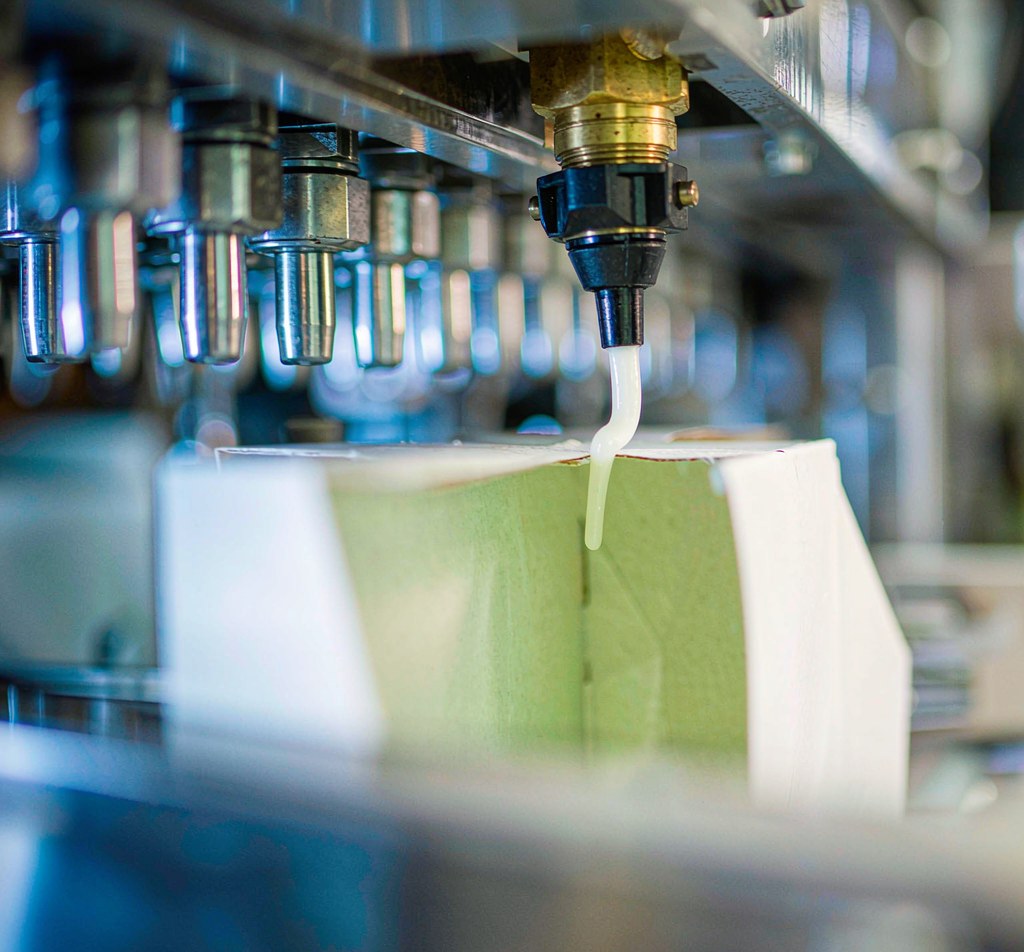
Pellets are melted in a heated tank, pumped through a heated hose, and applied through a heated nozzle. Each stage has its own temperature zone; if any zone is under- or overheated, the glue arrives at the flap too viscous or too thin — both weaken the bond.
Hot melt adhesive is a timer. Once the bead is applied, the glue has an open time — often 2 to 10 seconds — during which the surfaces must be brought together, followed by a brief compression time that finishes the bond. If the line runs faster than the glue's open time, or the closing station dwell is too short, even a perfect bead will not hold. Our article on turning rated speed into real output explains why nameplate speed is irrelevant to this glue window.
Symptom: finished cartons leave the machine with flaps that can be pulled apart by hand, or flaps that pop open during case packing.
Likely causes: tank or nozzle temperature too low, glue applied too narrow, compression time too short, or a coated board the adhesive cannot wet.
How to fix: start at the machine, not the glue. Verify each zone's actual temperature with a handheld pyrometer — sensors drift. Then check bead width: a flap bead should cover 60–80% of the flap surface; if it is a thin center line, widen the pattern or add a second bead. Finally, extend compression dwell slightly — on most cartoners this is adjustable without any mechanical change.
Symptom: fine threads of glue stretch between the nozzle and the carton, leaving hairs on the flap and mess on the machine frame.
Likely causes: nozzle temperature too high (glue is too fluid), nozzle-to-carton gap too large, or the wrong nozzle orifice size for the line speed.
How to fix: reduce the nozzle zone temperature in 5–10 °C steps until strings disappear, and bring the nozzle as close to the flap as the machine permits — distance amplifies stringing. If it persists at higher speeds, ask your supplier for a smaller orifice or a cut-off valve that snaps the bead cleanly. Light stringing at speed-up is normal; webbing across the nozzle is not.
Symptom: intermittent or missing beads, visible black flecks in the glue line, or a nozzle that needs cleaning every shift.
Likely causes: tank running too hot (degrading the adhesive), tank level left too low (exposing heater walls to air and residual glue), or a shift change routine that leaves glue cooking over the weekend.
How to fix: check the tank setpoint against the adhesive data sheet — most packaging hot melts want 150–170 °C, and every 10 °C above spec roughly doubles the degradation rate. Then adopt one rule: if the cartoner will sit idle more than a couple of hours, drop the tank to standby or switch it off. Finally, flush with approved purge glue on your scheduled deep-clean day — our maintenance checklist slots this into the monthly tier.
Symptom: glue visible on the outside of the flap, wet-looking patches, or cartons that cup and warp before they reach the case packer.
Likely causes: too much glue applied, nozzle temperature too high for the board, or a lightweight uncoated board that drinks adhesive.
How to fix: reduce pump pressure or bead volume until the bond passes a fiber-tear test without soak-through. Coated SBS, uncoated CRB and microflute all wet differently, which is why our carton board grade guide recommends approving glue and board together at the trial stage. If you recently switched board suppliers, re-run the bond test before blaming the machine.
Symptom: some cartons get glue, some do not; or one flap in a two-flap pattern is always dry.
Likely causes: clogged or worn nozzle, air in the pump, a failing gun solenoid, or a pattern-timing error after a recent format change.
How to fix: fire the gun manually from the HMI. A consistent bead on demand means the hydraulics are fine and the fault is pattern timing — common right after a format changeover when the encoder position was re-taught. A dry or sputtering bead points to the nozzle, filter or pump; check the inline filter first, a five-minute swap that fixes a surprising share of intermittent cases.
Symptom: the same machine, glue and settings seal one board grade perfectly and fail on another.
Likely causes: surface energy of the board, heavy varnish or UV coating on the flap, or high recycled content with weak surface fibers.
How to fix: get the adhesive supplier's substrate compatibility list and confirm the coating on the flap area. For heavily varnished flaps, move the pattern to the uncoated inner surface or specify a specialty adhesive. If your box uses a lid-and-base style instead of a tuck flap, bonding behaves differently — our carton styles guide explains each style's glue surfaces.
Symptom: a vision system or flap detector on the downstream checkweigher keeps rejecting cartons that look fine to the eye.
Likely causes: slightly inconsistent bead placement confusing the sensor, or marginal bonds that pass a pull test but flex enough to trip the detector.
How to fix: fix pattern consistency first — stable nozzle temperature, stable pump pressure and repeatable flap presentation stabilize detection far more than retuning the sensor. If rejects continue, compare failing cartons against the fiber-tear standard with QC and set the detection threshold to a defined, testable bond spec rather than an eyeball judgment.
Symptom: adhesive consumption per thousand cartons is visibly higher than it was at commissioning.
Likely causes: operators compensating for a marginal bond by increasing bead volume, a leaking gun valve, or pattern settings changed after troubleshooting without being written back to the recipe.
How to fix: track grams of glue per thousand cartons as a weekly KPI. When it rises, work through the causes above by probability rather than simply increasing volume. A healthy cartoner holds consumption flat within a few percent; if it cannot, the bond window — not the operator — needs attention.
| Symptom | Most likely cause | First check | Typical fix |
|---|---|---|---|
| Open flaps | Low temperature / short compression | Pyrometer on each zone | Raise temp to spec, widen bead, extend dwell |
| Stringing | Nozzle too hot, gap too large | Nozzle-to-flap distance | Lower nozzle temp 5–10 °C, reduce gap |
| Clogging, char | Tank overheated, idle glue cooking | Tank setpoint vs data sheet | Standby mode when idle, monthly purge |
| Soak-through, warp | Too much glue for the board | Bead volume vs board weight | Reduce volume, match adhesive to substrate |
| Intermittent beads | Clogged filter or timing error | Manual gun fire test | Swap filter, re-teach pattern timing |
| Bond fails on new board | Substrate incompatibility | Supplier compatibility list | Specialty adhesive or re-pattern to bare board |
| Fake rejects at detection | Inconsistent bead placement | Pattern stability over 10 cycles | Stabilize temp/pressure, retune threshold |
| Rising glue use | Compensating with volume | g / 1,000 cartons KPI | Fix bond window, restore recipe settings |
Notice how many of the eight problems trace back to a temperature zone out of specification. A weekly five-minute pyrometer audit — tank, hose, each gun — catches most glue drift before it produces scrap. Log the readings next to the setpoints; any zone more than about 10 °C off target deserves attention the same shift.
Beyond the weekly temperature audit, a compact glue-system routine looks like this:
Fold this into the machine-wide schedule in our maintenance checklist and glue stops being the line's surprise downtime source.
Troubleshoot at the machine level first — temperature, pattern, compression — because most fixes are free. Escalate when a bond fails even at correct settings with a known-compatible board, guns or pumps fail repeatedly inside the warranty window, or you cannot reach target speed without constant glue intervention. A capable supplier will run a joint trial with your actual board and glue, re-teach the pattern and hand back a written recipe — the acceptance testing we recommend in our installation and commissioning guide.
When specifying a new line, ask the supplier to quote hot melt equipment sized for your real production speed, not the nameplate rate. On high-speed food lines such as our MTK-150H cartoner, glue window management is built into the control system; on top-load lines such as the MTK-VC160/VC260, pattern flexibility for lid-and-base boxes matters more than raw speed.
In order of probability: temperature below spec (verify with a pyrometer, not just the HMI), bead too narrow, compression dwell too short, or a board coating the adhesive cannot wet. Fix in that order and re-test with a fiber-tear pull after each change.
Follow the adhesive data sheet first. Most packaging hot melts run 150–170 °C in the tank, with hose and nozzle typically 5–15 °C lower. Running hotter does not improve the bond — it chars the adhesive and creates the clogging problems above.
Wipe the nozzle plate daily and clean the inline filter weekly. A full purge with flushing glue is a monthly task, plus after any glue type change or shutdown longer than a few days.
Only if the machine is equipped for it — tank, pump, nozzles and pressing sections differ. Cold (water-based) glue gives longer open time and handles coated boards well but needs drying; hot melt sets in seconds and suits high-speed lines. Changing systems mid-life is a significant retrofit, so choose deliberately at purchase.
Glue trouble looks intimidating because it hides inside a heated, pressurized system, but the diagnosis ladder above resolves most cases in under an hour. If you want a cartoner whose glue system is engineered for your board, your speed and your box style, request a quote from Mattkay — we will size the hot melt equipment to your real line, not the brochure.