REQUEST A QUOTE
A serum bottle leaves the filler at 80 bottles a minute. Two hours later half a pallet is on hold: cartons scuffed along the edges, one leaflet in thirty folded two millimetres off, pump caps visibly out of square behind the window. Nothing has broken. The machine is doing exactly what it was specified to do — for a different product.
Cosmetics is the least forgiving category in cartoning. Products are light, containers are unstable and expensive, board is printed to a standard customers judge in their hands, and the range rarely stops at one SKU. A cosmetic cartoning machine is therefore less about raw speed than about how gently it handles a bottle at 60 cycles a minute — and how fast it becomes a different machine when the shade changes.
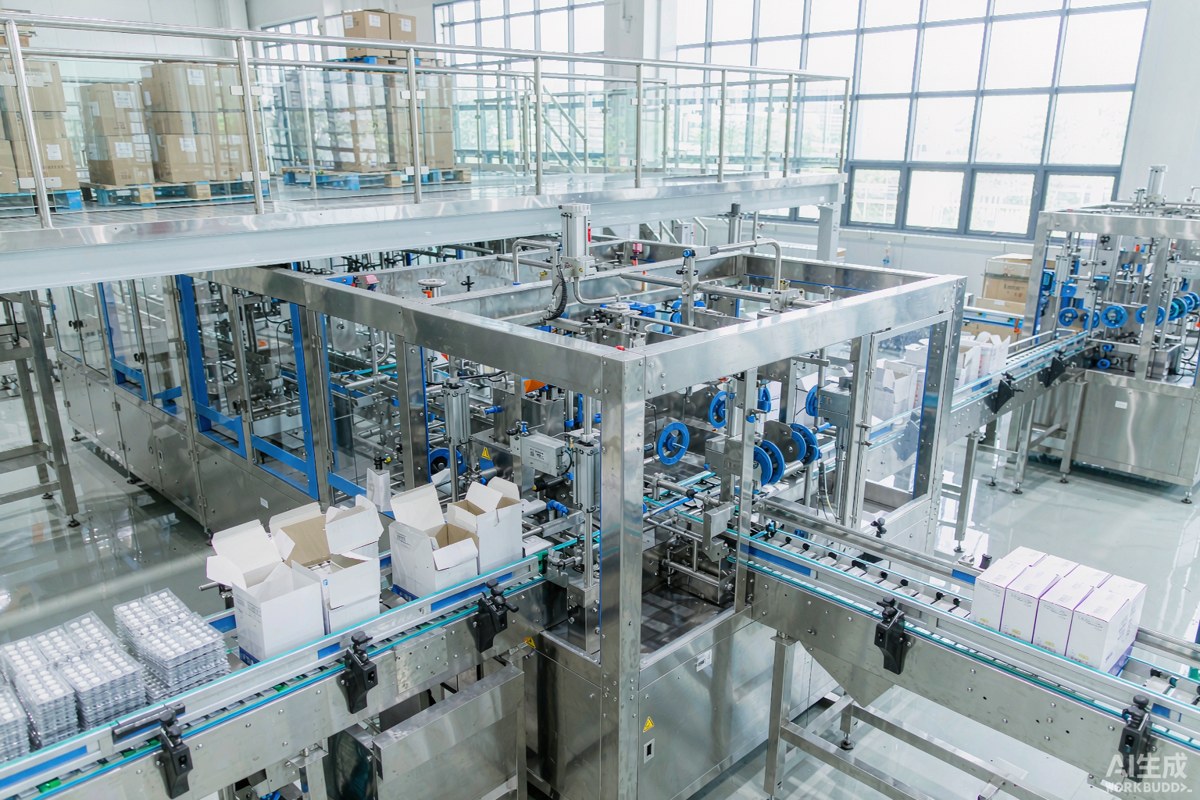
The sequence is the same as any automatic cartoning system: erect a flat carton, load the product, fold and insert a leaflet, glue, close, code. What changes in cosmetics is the middle of that sequence.
Three principles cover the category. Vertical loading drops the product into an upright carton. Horizontal end-loading pushes it sideways into a carton erected on its back. Top-loading lowers it into a pre-glued lid box. Each imposes a different stress on the container, and that stress — not rated speed — limits which products you can run.
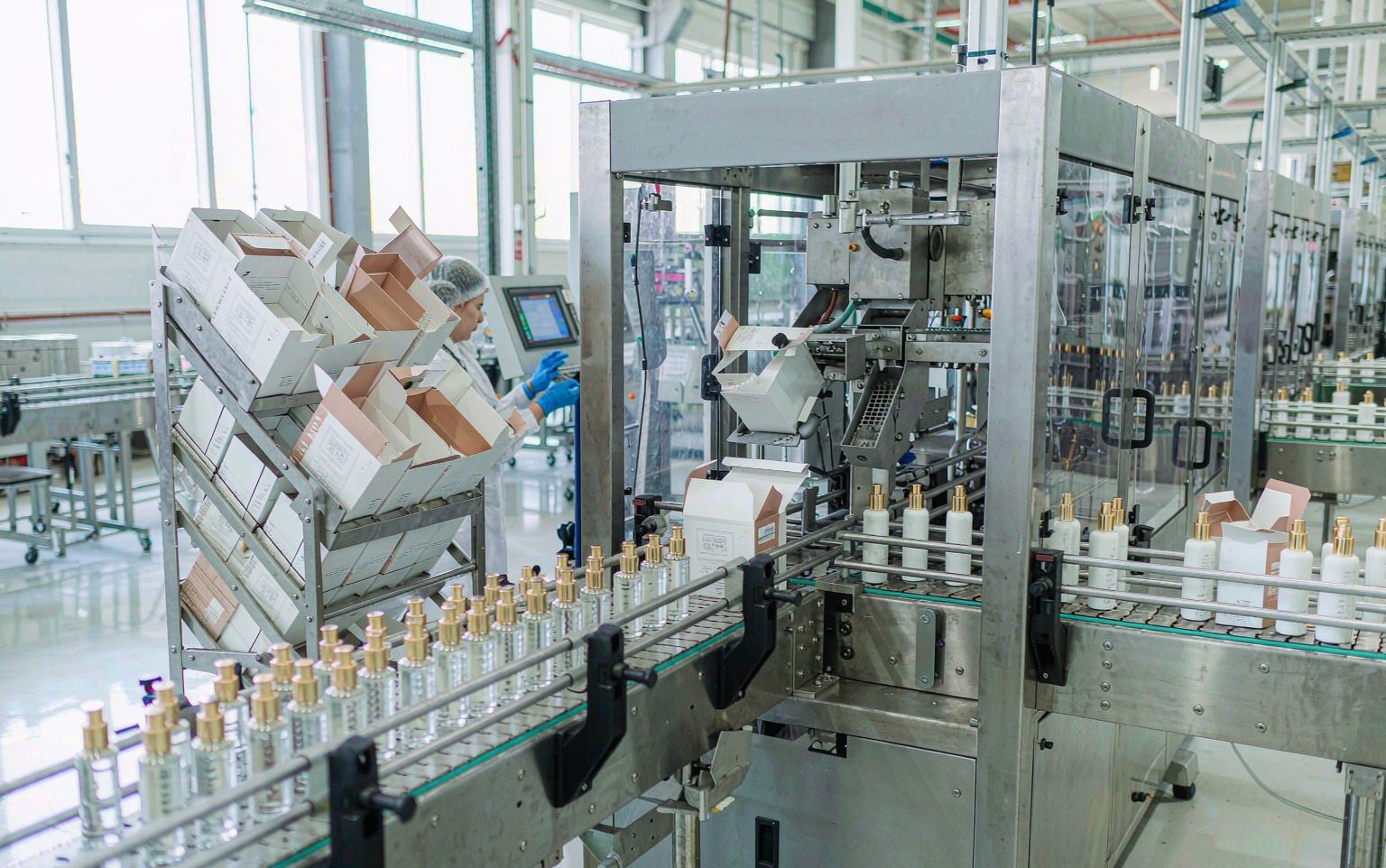
Most skincare and fragrance packs need something before boxing: a lining tape over the cap, a shrink band, a tamper label. On a dedicated bottle lining and cartoning machine this happens inline in one transfer, so the bottle is never re-oriented by hand. Doing it offline costs an operator per shift and adds handling that shows up later as scuffing.
A leaflet that is present but folded wrong is worse than a missing one, because it passes a weight check. Cosmetic lines increasingly use vision to confirm leaflet presence, fold orientation, cap colour and code position before closing — cheaper than one recall, and easier to validate than a manual check.
If you are still choosing between loading principles, the comparison in horizontal vs vertical cartoning machines explains the mechanics. For cosmetics the choice usually narrows to four builds.
The common entry point for beauty brands. A flat carton is erected into a vertical pocket, the product drops in, flaps are glued shut. Compact, inexpensive and gentle enough for compacts, sachets, soap and mascara. Its weakness is height: a 120 mm bottle dropped in lands on its base hard enough to crack a cap, so tall products need a controlled lowerer rather than a drop.
The workhorse for boxed bottles and tubes. Cartons are erected on their back, the product is pushed in from the end by a ram, the tuck flap or glue seam closes behind it. Because the bottle never falls, this is the safest configuration for glass, heavy jars and pumps. Output runs 60–150 cartons a minute, and the carton's largest panel faces up — which matters when the design carries a foil logo.
A horizontal cartoner with a lining station on the infeed. Bottles arrive from the filler, get a tape or band over the cap, are inspected, then cartoned without leaving the conveyor. The standard build for serums, toners and fragrance at 40–100 bottles a minute; above that, lining and cartoning are usually split into two machines with a buffer between them.
For rigid gift boxes and magnetic-closure cartons the product must be lowered in from above. A top-opening lid box packing machine does this at 20–60 boxes a minute, often with a tissue wrap. Slower by nature, but the only way to pack a gift set without crushing the corners.
| Configuration | Best for | Typical speed | Carton style | SKU-to-SKU changeover |
|---|---|---|---|---|
| Vertical intermittent | Compacts, sachets, small jars, soap | 30–80 cartons/min | Straight tuck, reverse tuck | 10–25 min |
| Horizontal end-load | Bottles, tubes, glass jars, pumps | 60–150 cartons/min | Reverse tuck, automatic bottom | 25–45 min |
| Inline bottle lining + cartoning | Serums, toners, fragrance | 40–100 bottles/min | Reverse tuck with window | 30–50 min |
| Top-load lid box | Gift sets, rigid premium boxes | 20–60 boxes/min | Lid and base, magnetic | 20–40 min |
Read the last column before the third. In cosmetics the changeover number usually costs more than the speed number, because a shade range generates small batches all week.
Buyers routinely match cartoner speed to filler speed, then wonder why the line runs at 70% of both. The cartoner must be sized above the filler, not equal to it, because it has to absorb every filler stop — a cap jam, a label reel change, a checkweigher reject.
Size the cartoner 15–20% above the filler's nominal rate and leave 30–60 seconds of buffer between them. On a 60 bottles-per-minute line that means a cartoner rated at 70–72, not 60. The buffer matters more than the margin: without it a four-second filler stop becomes a cartoner stop, and every restart costs two or three cartons in scrap.
Rated speed is also not output. Expect 75–85% of the rated figure in real production once changeovers, cleaning and minor stops are counted — the arithmetic is in how to turn rated speed into real output. A 100-carton machine across 40 SKUs can deliver less than a 70-carton machine that changes over in twelve minutes.
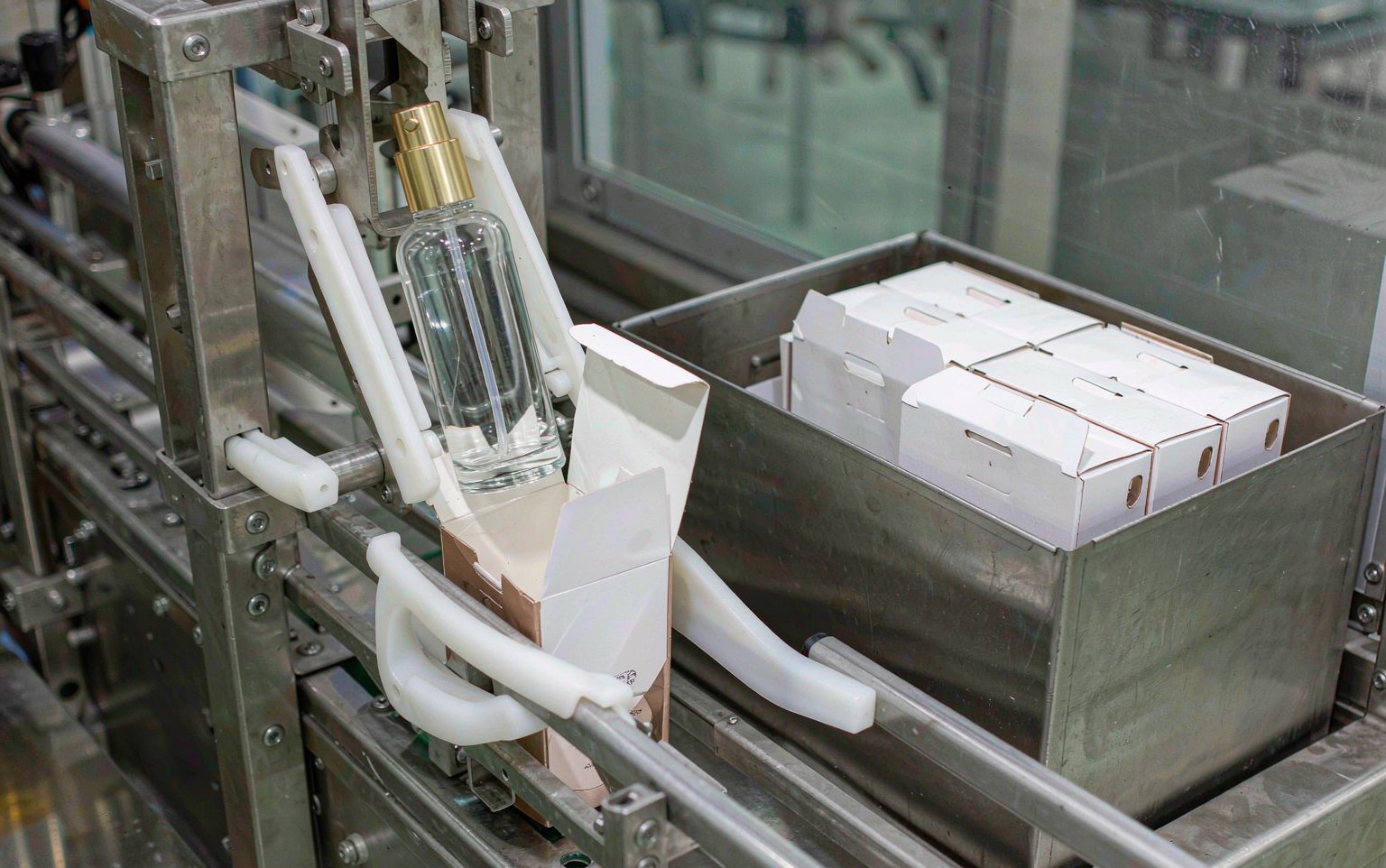
Beauty containers are the hardest product family to convey: light relative to their height, high centre of gravity, easy to scratch, and often round with a seam that will find the one sharp edge in your guides.
Trial on your own containers, not the builder's sample bottles. Lines that run perfectly on a demo jar often jam on a supplier's bottle with a 0.4 mm flash line at the base.
The carton is part of the machine. Board that is too light bulges and will not feed; too heavy and it cracks at the score. Three grades dominate:
Two mechanical details decide whether a beautiful carton runs at speed. Grain direction must run parallel to the fold that forms the hinge, or the flap springs open and the glue seam fails. Surface treatment matters equally: matt lamination or soft-touch film will not accept cold PVA reliably. If your designer specifies soft-touch, plan on hot-melt glue — or expect a 1–2% open-flap rate that only appears at the customer. Glue tabs also need 12–15 mm of clean, unvarnished board; varnish running into the tab is the most common cause of a carton that will not stay shut.
A foundation line with 24 shades, three sizes and two carton designs is 144 format combinations. At 30 minutes per change, two changes a day removes an hour of capacity — and two a day is optimistic. Format design therefore deserves as much attention as machine speed.
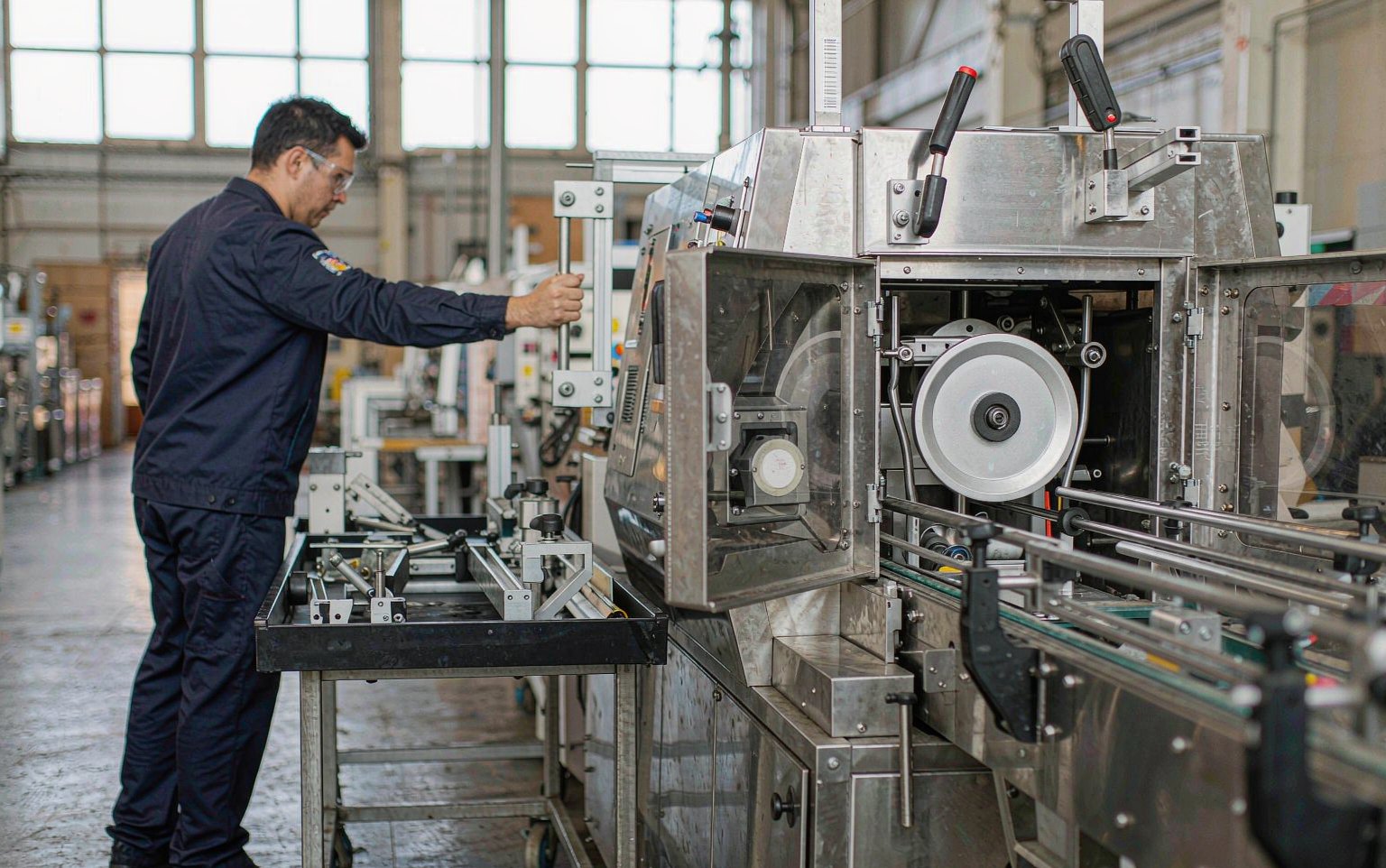
What shortens a change: format kits stored at the machine and labelled by SKU, digital readouts for rails and magazines instead of hand cranks, tool-free quick-release handles, and carton magazines swapped as a cassette. A structured SMED programme typically takes a cosmetic cartoner from 45 minutes to 15–20 without new hardware — the method is in how to cut changeover time with SMED. If a supplier quotes a changeover time, ask whether it includes line clearance, first-off approval and trial cartons; most inflated numbers exclude all three.
Cosmetics is regulated under ISO 22716 rather than pharmaceutical GMP, but audits ask similar questions and the answers are built into the machine, not added later.
Ask for the cleaning time in the quotation. A machine that takes 50 minutes to clean will be cleaned badly by the third shift, and no audit protocol survives that.
Most bad cartoner purchases start with a vague enquiry. A supplier who receives the following can quote accurately — and one who cannot answer questions about them is telling you something.
Send the samples. A quotation based on a drawing is an estimate; one based on a trial is a commitment.
Indicative 2026 pricing, standard configuration: semi-automatic USD 8,000–20,000, standard automatic USD 25,000–60,000, inline bottle lining and cartoning USD 45,000–90,000, high-speed above 120 cartons a minute USD 80,000–150,000. Carton tooling adds USD 1,500–4,000 per format, which multiplies fast across a shade range — the format count belongs in the budget, not a footnote. The full structure is broken down in the automatic cartoner cost breakdown.
Payback is driven by labour and carton quality, not speed. A machine replacing six manual packers on two shifts usually returns its cost in 14–24 months, with scuff and rework savings adding 10–15%. Run the numbers with the method in how to calculate the payback period before comparing quotations.
Yes, if the format set is designed for both and the loading method suits the heavier of the two. A horizontal end-load cartoner with a changeable pocket set will run a 30 mm serum bottle and a 60 mm cream jar on the same frame. Vertical drop-loading machines struggle with heavy jars and are better kept to light, short products.
Ten thousand units over a seven-hour productive shift is roughly 24 a minute. Allow 20% headroom for stops and changeovers, and specify 30 cartons a minute — a standard automatic machine, not a high-speed one. Buying 100 a minute for this volume adds cost and changeover complexity you never recover.
Only above roughly 100 bottles a minute, or when the lining material needs a curing step. Below that, an inline lining station is cheaper, needs one operator instead of two, and eliminates the re-handling that causes scuffing.
No hard limit — the constraint is changeover time and storage. Machines running 60–100 formats exist, but each carries a labelled format kit and uses digital readouts. Beyond about 40 formats, budget for a dedicated changeover technician and tool-free format design rather than assuming operators absorb the work.
Send your containers, carton die-lines and shift output, and we will tell you which configuration fits — including the formats you probably do not need to tool. Trials on your own bottles are the only way to know whether a machine will run your range at speed, and they are what a serious quotation is built on. Request a quote and a line assessment.