
REQUEST A QUOTE
Choosing the wrong automatic cartoning machine is an expensive mistake we've seen repeatedly: buyers who ordered on catalog speed and later discovered their carton blanks jam every shift, or who paid for servo automation they never needed. This guide gives you the exact 7-step selection framework our engineers use when specifying a cartoner for a customer's product — so you can shortlist the right machine before you ever talk to a salesperson.
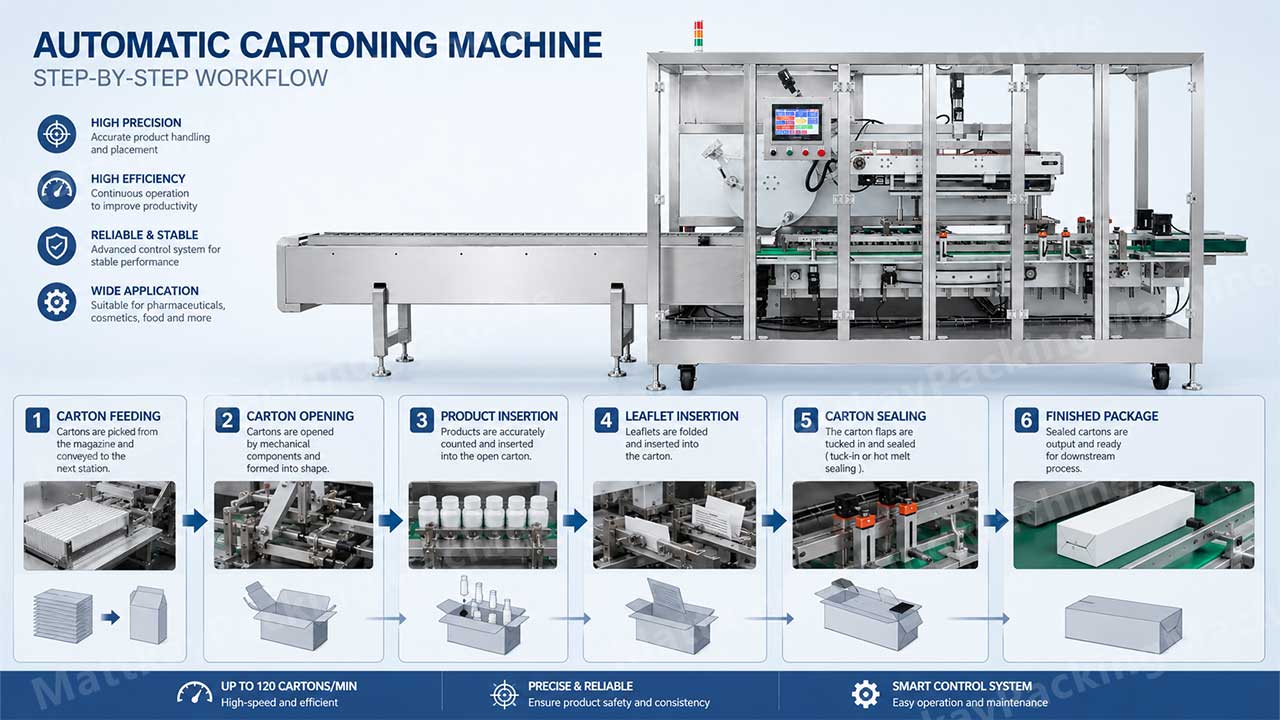
The product dictates everything. Document these before contacting any supplier:
Factory experience note: the most common specification error is quoting only the flagship SKU. The odd-shaped promotional pack you run twice a year is what determines whether the machine works — or becomes a manual station.
Use this formula instead of guessing:
Required cartons/min = Products per minute ÷ Products per carton
Example: your upstream supplies 500 sachets/min, packed 10 per carton → you need 50 cartons/min.
Then apply the two rules buyers learn the hard way:
| Factor | Horizontal Cartoner | Vertical Cartoner |
|---|---|---|
| Product shape | Flat, stable, box-like (blister packs, sachets, pouches, DVDs) | Tall, free-standing (bottles, jars, cans) |
| Typical speed | Higher (up to 300/min continuous) | Lower (30–80/min) |
| Product stability risk | Low — product lies down | Higher — tall products can tip during loading |
| Common industries | Pharma, food, cosmetics | Beverage, condiments, dairy |
For a deeper comparison with diagrams, read our horizontal vs vertical cartoning machine guide.
You must also choose the motion type within horizontal machines:
Confirm your carton supplier can pre-fold (pre-break) the blanks either way — this single detail improves opening reliability more than any machine adjustment. If you plan to run both styles, specify a combi tuck-and-glue machine from the start.
Ask any production manager what they hate most about their cartoner and the answer is usually changeover time. Your SKU count decides the answer:
A disciplined changeover with written checklists also matters more than hardware; see the changeover section of our troubleshooting guide.
Automatic cartoners from Chinese manufacturers typically range from $12,000 (entry intermittent) to $150,000+ (high-speed servo, pharma grade). The machine price is only part of first-year spend — tooling, spares, shipping, and commissioning add 15–30%. Our complete cartoner cost breakdown details every line item with 2026 price ranges and an ROI payback example.
Budget rule of thumb: define the budget from your payback calculation (labor saved + reject reduction), not from a wish number. Most of our customers see payback in 8–14 months.
Two machines with identical specs can deliver completely different ownership experiences. Before signing:
| Check | What Good Looks Like |
|---|---|
| Factory audit | Real manufacturer (visit or video call), not a trading company |
| Certifications | CE marking as standard; ISO9001 factory; GMP design for pharma |
| Component brands | Named PLC, sensors, pneumatics (e.g., Panasonic, SICK, Festo) — not "imported brand" |
| Trial | Willing to run YOUR product and carton samples before shipment |
| Documentation | English manuals, wiring diagrams, spare parts list included |
| After-sales | Remote video support included; engineer dispatch option with clear pricing |
| Track record | Reference customers in YOUR industry you can contact |
The trial with real samples is the single most valuable step — it exposes feeding problems, carton quality issues, and speed shortfalls while they're still the supplier's problem to fix.
Print this and tick every line before approving a purchase order:
If manual packing exceeds 2–3 workers, or your line is the bottleneck limiting output, automation pays back quickly — our customers typically see payback in 8–14 months. Below that scale, a semi-automatic machine is usually the smarter first step.
Yes, within its specified size envelope — check the minimum and maximum carton dimensions in the spec sheet against ALL your SKUs. More SKUs means longer changeovers unless you choose servo automatic adjustment.
Typical lead time from Chinese manufacturers is 30–60 days after deposit, plus 15–35 days sea freight, plus 2–5 days installation. Plan your packaging material stock accordingly.
Compare itemized configurations instead. A $3,000 cheaper machine without named-brand components, spares kit, or trial offer usually costs more in year one — see our cost breakdown guide for the full picture.
Product photos with dimensions, carton drawings, target speed, sealing preference, and your power supply. Send them to our engineers here — you'll get a configuration proposal with speed calculation, not just a price.
Mattkay (MTK) manufactures automatic cartoning machines in China for food, pharmaceutical, cosmetic, and industrial products — ISO9001 & CE certified, 30+ patents, 300+ completed lines since 2014. Share your product details and we'll recommend the right configuration honestly, even if it's a smaller machine than you expected: Request a Free Selection Consultation.
Machines that match this guide
Not sure which model fits your product? Send your carton size and product sample and we will recommend the right configuration.
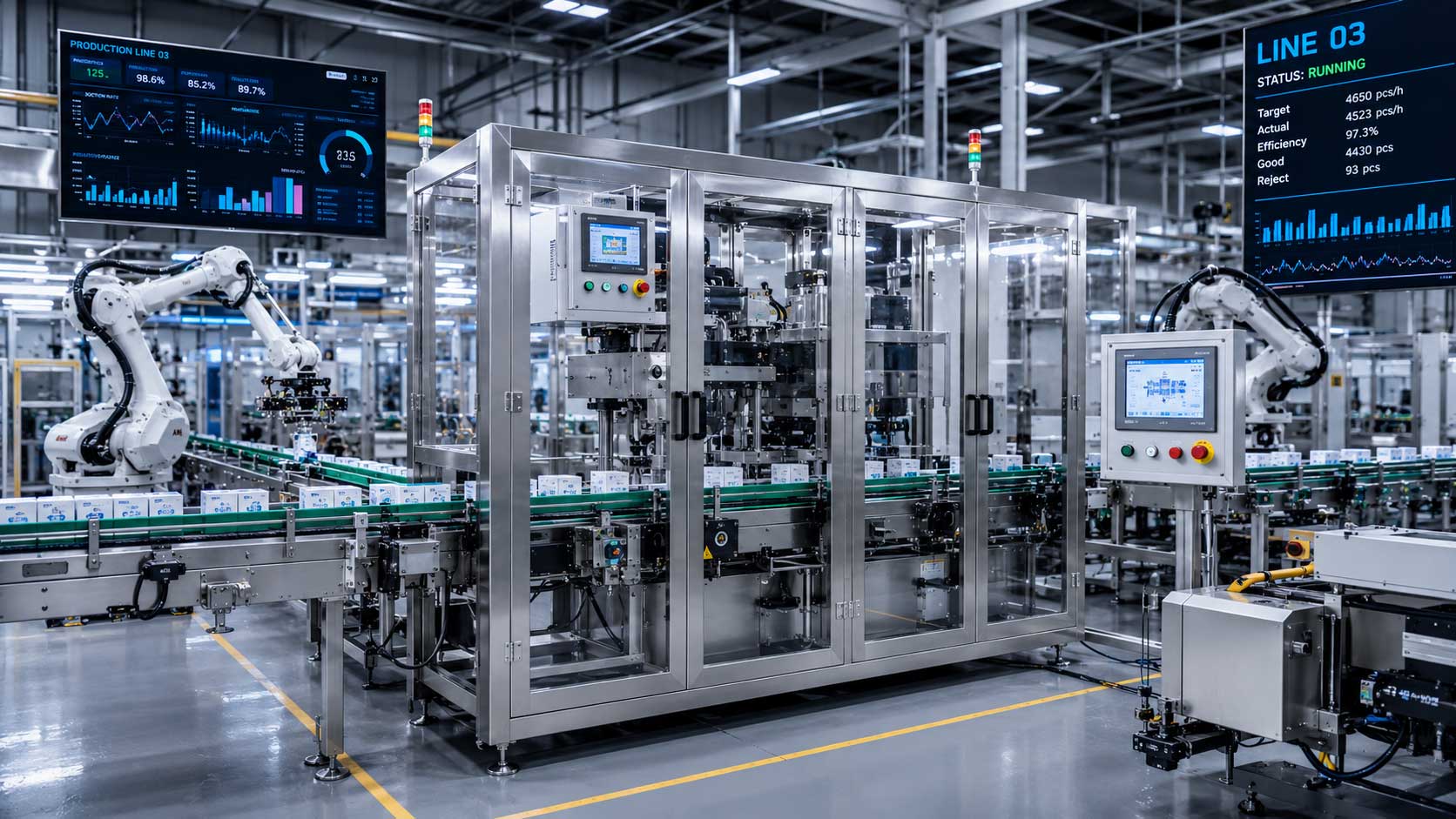
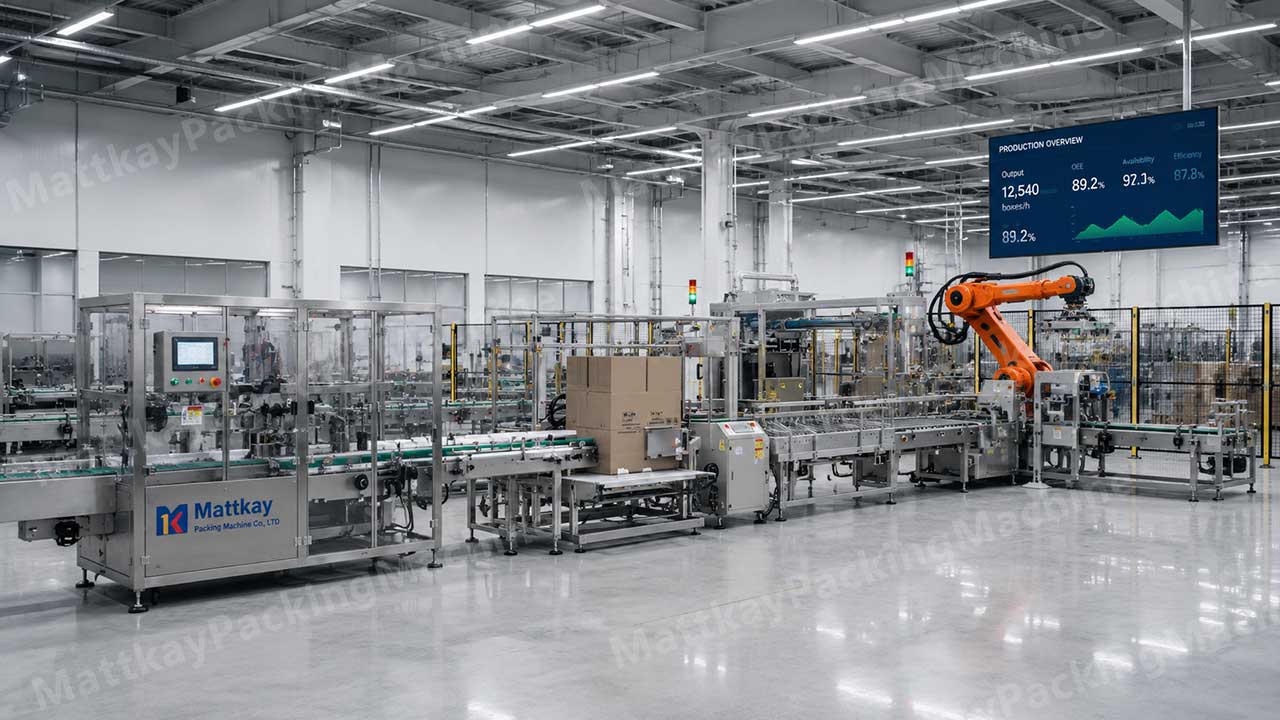
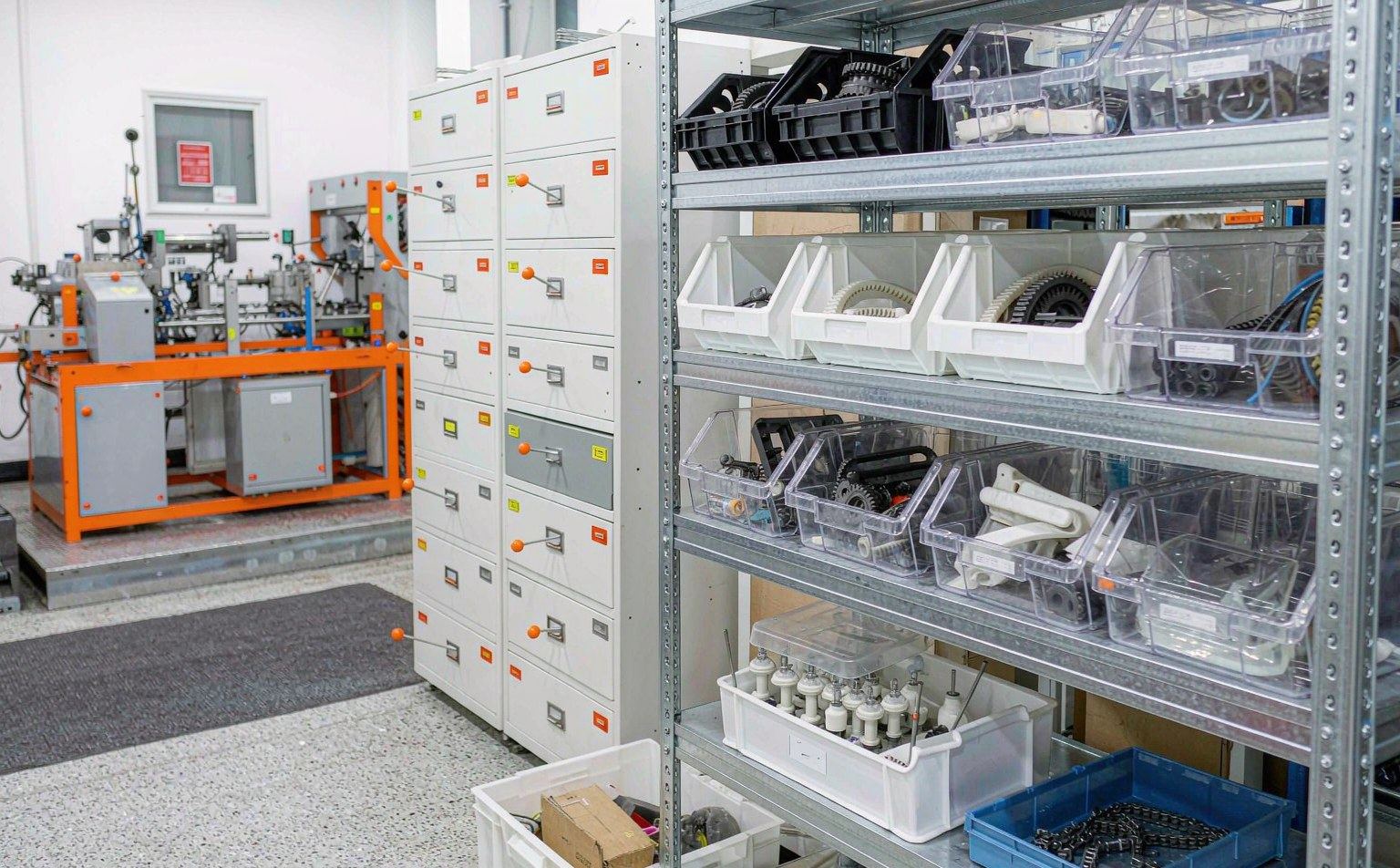

[…] What Determines the Cost of an Automatic Cartoner? […]
The cost of an automatic cartoner depends on factors such as machine speed, carton size range, automation level, product complexity, customization, and optional features. Higher-speed and more advanced models cost more but offer greater efficiency and long-term savings.
[…] Plan the Factory Layout and Installation Requirements […]
[…] For a broader selection framework, read Mattkay's guide to selecting the right automatic cartoner. […]
[…] close. Rule of thumb: product volume should leave 2–3 mm of clearance on each dimension. See our guide to selecting the right cartoner for your factory for sizing […]